
3rd grade worksheets & activities
Multiplication and division facts, rounding, fractions on a number line, and area and perimeter, solved one detective case at a time. Plus reading, science, ELA, social studies and phonics cases below.
Start here
Three ways in, depending on what you need this week.
Case of the Week
A five-minute case to put on the board. Three clues, six suspects, a new lineup every time you play.
Play it now →
3rd Grade Emergency Sub Plans
No-prep substitute packet
See the case file →
Multiplication Arrays & Word Problems
3.OA.A.1 · arrays & equal groups
See the case file →Every 3rd grade math skill
Grouped the way the Common Core standards are, so you can find the pack for the unit you're teaching right now.
 Frosty Flo
Operations & algebraic thinking
3.OA.A.1Interpret productsCase open3.OA.A.2Interpret quotientsCase open3.OA.A.3Multiplication & division word problemsCase open3.OA.A.4Unknown in an equationCase open3.OA.B.5Properties of multiplicationCase open3.OA.B.6Division as unknown factorCase open3.OA.C.7Multiply & divide within 100Case open3.OA.D.8Two-step word problemsCase open3.OA.D.9Arithmetic patternsCase open
 Multiplication & Division CSI Mystery Worksheets3.OA.C.7 · Multiply & divide within 100See the case file →
 Multiplication & Division Word Problems3.OA.A.3 · Multiplication & division word problemsSee the case file →
 Multiplication Arrays3.OA.A.1 · Interpret productsSee the case file →
 Distributive Property3.OA.B.5 · Properties of multiplicationSee the case file →
 Division Equal Sharing & Equal Groups3.OA.A.2 · Interpret quotientsSee the case file →
 Number Patterns and Rules3.OA.D.9 · Arithmetic patternsSee the case file →
 Missing Factor Multiplication & Division3.OA.A.4 · Unknown in an equationSee the case file →
 Two-Step Word Problems3.OA.D.8 · Two-step word problemsSee the case file →
 Farmer Fern
Number & operations in base ten
3.NBT.A.1Round to 10 or 100Case open3.NBT.A.2Add & subtract within 1000Case open3.NBT.A.3Multiply by multiples of 10Case open
 3-Digit Subtraction with Regrouping3.NBT.A.2 · Add & subtract within 1000See the case file →
 Rounding Whole Numbers CSI Mystery Worksheets3.NBT.A.1 · Round to 10 or 100See the case file →
 3-Digit Addition with Regrouping3.NBT.A.2 · Add & subtract within 1000See the case file →
 Fall Addition & Subtraction CSI Mystery Worksheets3.NBT.A.2 · Add & subtract within 1000See the case file →
 Summer Addition & Subtraction CSI Mystery Worksheets3.NBT.A.2 · Add & subtract within 1000See the case file →
 Addition & Subtraction CSI Mystery Worksheets3.NBT.A.2 · Add & subtract within 1000See the case file →
 Summer Addition & Subtraction CSI Mystery Worksheets3.NBT.A.2 · Add & subtract within 1000See the case file →
 3-Digit Addition & Subtraction3.NBT.A.2 · Add & subtract within 1000See the case file →
 Nina Ninja
Fractions
3.NF.A.1Unit fractionsCase open3.NF.A.2Fractions on a number lineCase open3.NF.A.3Equivalent & compare fractionsCase open
 Fractions CSI Mystery Worksheets3.NF.A.1 · Unit fractionsSee the case file →
 Fractions on a Number Line Digital Escape Room3.NF.A.2 · Fractions on a number lineSee the case file →
 Simplifying Fractions Digital Escape Room3.NF.A.3 · Equivalent & compare fractionsSee the case file →
 Fractions CSI Mystery Worksheets3.NF.A.1 · Unit fractionsSee the case file →
 Fractions CSI Mystery Worksheets3.NF.A.1 · Unit fractionsSee the case file →
 Equivalent Fractions3.NF.A.3 · Equivalent & compare fractionsSee the case file →
 Comparing Fractions3.NF.A.3 · Equivalent & compare fractionsSee the case file →
 Fractions on a Number Line3.NF.A.2 · Fractions on a number lineSee the case file →
 Slick Nick
Measurement & data
3.MD.A.1Time & elapsed timeCase open3.MD.A.2Liquid volume & massCase open3.MD.B.3Scaled picture & bar graphsCase open3.MD.B.4Line plotsCase open3.MD.C.5Area conceptsCase open3.MD.C.6Area by counting squaresCase open3.MD.C.7Area by multiplyingCase open3.MD.D.8PerimeterCase open
 Telling Time CSI Mystery Worksheets3.MD.A.1 · Time & elapsed timeSee the case file →
 Area & Perimeter CSI Mystery Worksheets3.MD.C.7 · Area by multiplyingSee the case file →
 Bar Graphs and Pictographs3.MD.B.3 · Scaled picture & bar graphsSee the case file →
 Perimeter (Customary & Metric)3.MD.D.8 · PerimeterSee the case file →
 Measuring Liquid Volume and Mass3.MD.A.2 · Liquid volume & massSee the case file →
 Area and Perimeter3.MD.C.6 · Area by counting squaresSee the case file →
 Line Plots and Dot Plots3.MD.B.4 · Line plotsSee the case file →
 Elapsed Time Word Problems3.MD.A.1 · Time & elapsed timeSee the case file →
 Tommy Tricks
Geometry
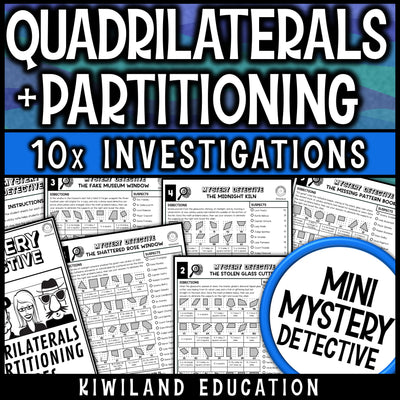
3.G.A.1QuadrilateralsCase open3.G.A.2Partition shapes into equal partsCase open
Sub plans, review & escape rooms
Sub plansNo-prep substitute packetReviewBack-to-school, Halloween & end-of-yearEscape roomsPrintable & digital
Most useful3rd Grade Emergency Sub PlansNo-prep substitute packetSee the case file → 3rd Grade Math ReviewSpiral review · back to schoolSee the case file →
 Halloween3rd Grade Halloween ReviewFacts, rounding & fractionsSee the case file →
 3rd Grade One-Page Escape RoomPrintable spiral reviewSee it on TPT ↗
 Free3rd Grade Back-to-School Escape RoomDigital reviewSee it on TPT ↗
 3rd Grade Math JeopardyTest prep game showSee the case file →
Reading, science & more
The same detective format: every right answer clears a suspect. Pick a subject below or from the bar at the top.
Reading
Reading comprehensionHolidays and traditionsFiction comprehensionInferencingMain idea
 Cause & Effect Escape RoomDigital escape room · Grades 3–6See the case file →
 First Week Get-to-Know-You MysteryMystery worksheets · Grades 2–4See the case file →
 Drawing Conclusions Reading MysteryReading mystery · Grades 3–5See the case file →
 Fact & Opinion Escape RoomDigital escape room · Grades 3–5See the case file →
 Feelings & Emotions Escape Room, Gr 2–3Digital escape room · Grades 2–3See the case file →
 Dragons Fiction Reading MysteryReading mystery · Grades 3–6See the case file →
 Friendship Reading MysteryReading mystery · Grades 3–6See the case file →
 Summer Growth Mindset Escape RoomDigital escape room · Grades 2–5See the case file →
 All About Witches Reading MysteryReading mystery · Grades 3–6See the case file →
 Easter Making Inferences Escape RoomDigital escape room · Grades 3–6See the case file →
Science
Habitats and adaptationsAnimals and insectsEnergySharksPlants and pollination
 All About Spiders Reading MysteryReading mystery · Grades 3–6See the case file →
 Plant & Animal Cells Reading MysteryReading mystery · Grades 3–6See the case file →
 Planet Earth Reading MysteryReading mystery · Grades 3–6See the case file →
 Coral Reefs Reading MysteryReading mystery · Grades 3–6See the case file →
 Conservation of Energy Reading MysteryReading mystery · Grades 3–6See the case file →
 Droughts Reading MysteryReading mystery · Grades 3–6See the case file →
 Forces and Motion Escape RoomDigital escape room · Grades 3–5See the case file →
 Animal Adaptations Reading MysteryReading mystery · Grades 3–6See the case file →
 Human Impact on EnvironmentReading mystery · Grades 3–6See the case file →
 Butterfly Life Cycle Reading MysteryReading mystery · Grades 3–6See the case file →
ELA & grammar
Figurative languageContext cluesELA reviewText structurePoint of view
 Capitalization & Punctuation Task CardsTask cards · Grades 3–6See the case file →
 Context Clues Game ShowGame show · Grades 3–6See the case file →
 3rd Grade ELA Review Game ShowGame show · Grades 2–4See the case file →
 Christmas Figurative LanguageDigital escape room · Grades 3–6See the case file →
 Point of View Escape RoomDigital escape room · Grades 3–6See the case file →
 Summer Prepositions of Place Escape RoomDigital escape room · Grades 1–3See the case file →
 Antonyms & Synonyms MysteryMystery worksheets · Grades 1–4See the case file →
 Text Structure Game ShowGame show · Grades 3–6See the case file →
 Summer Joke Riddles Escape RoomDigital escape room · Grades 3–6See the case file →
 Context Clues MysteryMystery worksheets · Grades 3–6See the case file →
Social studies
Ancient civilizationsWestward expansionWomen's historyPresidentsBiographies
 Declaration of IndependenceReading mystery · Grades 3–6See the case file →
 Ancient China Reading MysteryReading mystery · Grades 3–6See the case file →
 Frida Kahlo Reading MysteryReading mystery · Grades 3–6See the case file →
 Rosa Parks Reading MysteryReading mystery · Grades 3–6See the case file →
 Three Branches of GovernmentReading mystery · Grades 3–6See the case file →
 Easter Map Skills Escape RoomDigital escape room · Grades 1–3See the case file →
 Abraham Lincoln Reading MysteryReading mystery · Grades 3–6See the case file →
 California Gold Rush Reading MysteryReading mystery · Grades 3–6See the case file →
 Eleanor Roosevelt Reading MysteryReading mystery · Grades 3–6See the case file →
 Ancient Egypt Reading MysteryReading mystery · Grades 3–6See the case file →


Escape rooms & games
Figurative languageAddition and subtraction within 100InferencingMeasurementForces and motion
 Christmas 2-Digit Add & SubtractDigital escape room · Grades 2–4See the case file →
 2D Shapes Escape RoomDigital escape room · Grades 2–4See the case file →
 Valentine's Day 3D Shape AttributesDigital escape room · Grades 2–4See the case file →
 Christmas Add & Subtract Within 100Digital escape room · Grades 1–3See the case file →
 St. Patrick's Day Add & Subtract to 1000Digital escape room · Grades 2–4See the case file →
 2-Digit Addition Within 100 Escape RoomDigital escape room · Grades 1–3See the case file →Cause & Effect Escape RoomDigital escape room · Grades 3–6See the case file →Context Clues Game ShowGame show · Grades 3–6See the case file →3rd Grade ELA Review Game ShowGame show · Grades 2–4See the case file →
 Thanksgiving Elapsed Time Escape RoomDigital escape room · Grades 3–6See the case file →
The year planner
One math suggestion a month that matches where most classes are in the curriculum.
Reading for 3rd grade teachers
Classroom ideas, sub-day plans and seasonal activities.

Summer Activities That Stop the Slide: For Summer School, Home and the Last Week
For the teacher finishing in June, the summer school teacher and the parent asking what to do in July: small, regular, self-checking work on...
Read the post →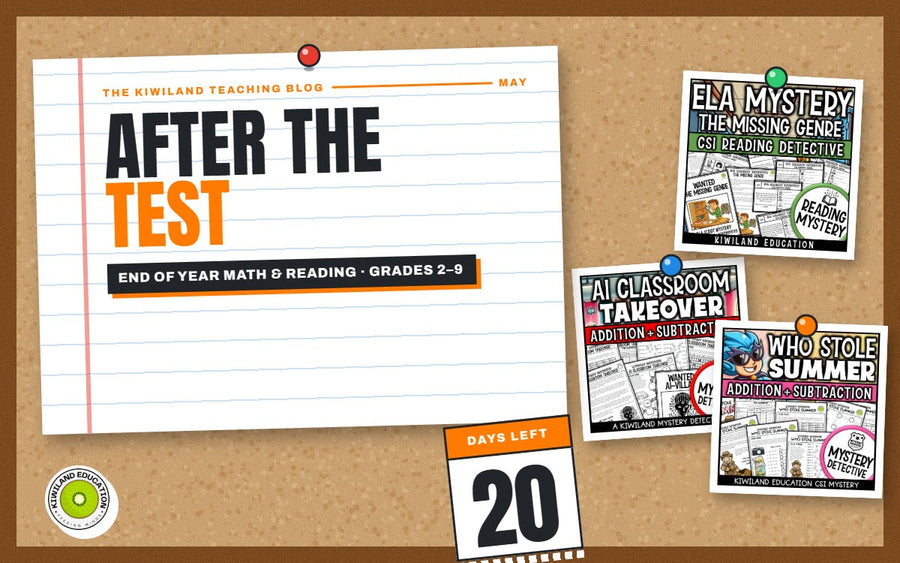
End of Year Activities After Testing: A Plan for the Last Four Weeks
Fifteen to twenty teaching days after the test, planned as a last pass through the year's skills the class will actually finish. Grades 2–9.
Read the post →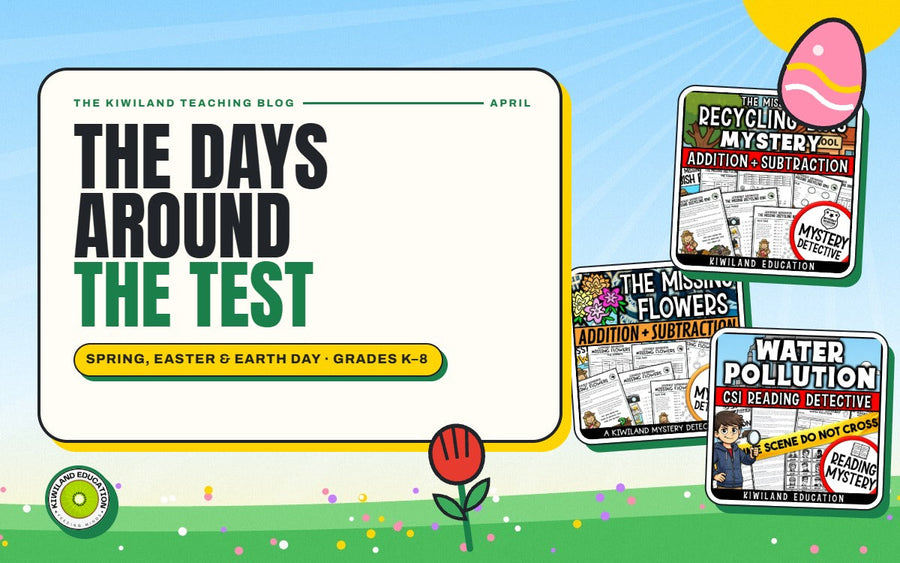
Spring Activities for Testing Season: Easter, Earth Day and the Weeks Between
Built for the days around state testing: short, quiet, self-checking and still on standard. Spring, Easter and Earth Day, K–8.
Read the post →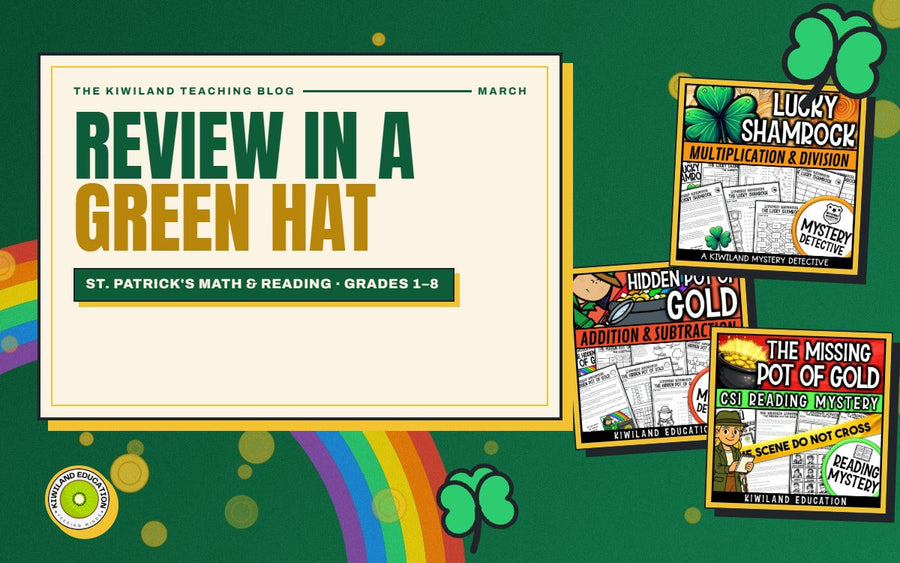
St. Patrick's Day Activities, and the March Review Before Testing
March is the last clear run before state testing. A St. Patrick's week plan, plus the review days around it, for Grades 1–8.
Read the post →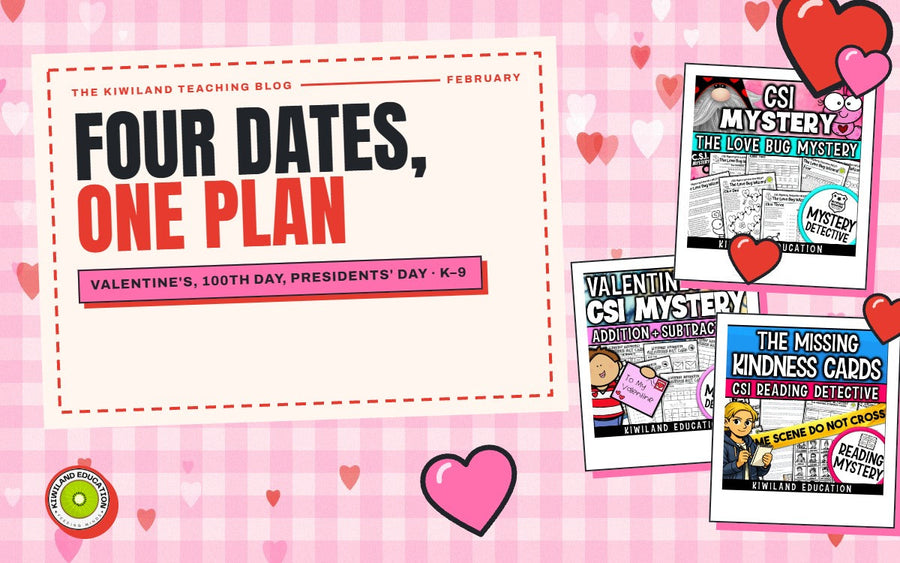
February Activities That Still Teach: Groundhog Day, the 100th Day, Valentine's Day and Presidents' Day
Four holidays in the shortest month. A date-by-date plan with self-checking math cases, reading mysteries and digital escape rooms for K–9.
Read the post →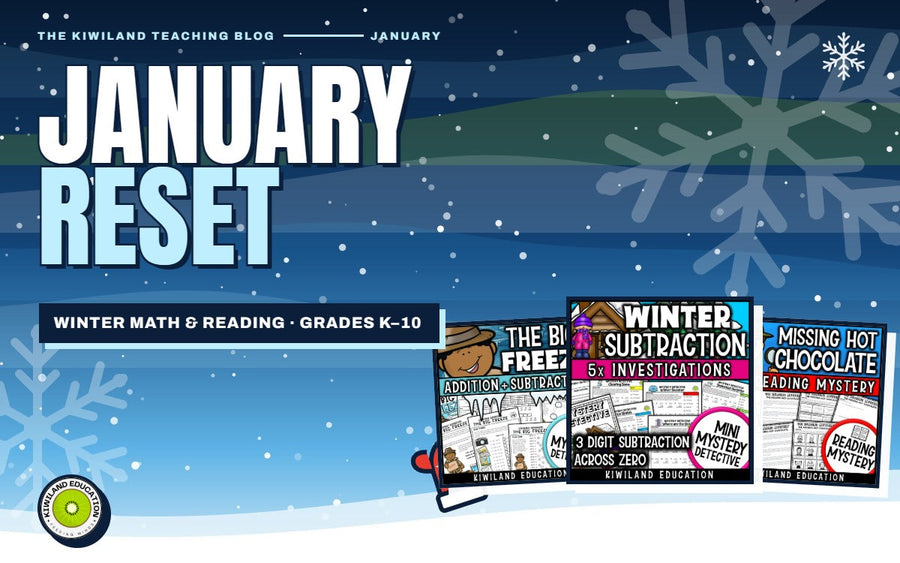
Winter Activities for the First Week Back: A January Reset Plan
The first week of January is a review week, not a fresh start. A first-week-back plan for winter math and reading that puts December...
Read the post →Grade 3 FAQ
What math do 3rd graders learn?
Common Core 3rd grade math has five domains: operations and algebraic thinking, number and operations in base ten, fractions, measurement and data, and geometry. The four focus areas are multiplication and division within 100, understanding fractions as numbers, area and how it connects to multiplication, and describing two-dimensional shapes. Students also round to the nearest 10 or 100, add and subtract within 1,000, tell time to the nearest minute, and draw scaled picture and bar graphs.
Should 3rd graders know their multiplication facts?
Yes. Standard 3.OA.C.7 says that by the end of 3rd grade students should know from memory all products of two one-digit numbers and multiply and divide fluently within 100. Most classes build toward this across the year, starting with arrays and equal groups and moving on to fact strategies and fluency practice.
What fractions do 3rd graders learn?
Third graders work with denominators of 2, 3, 4, 6 and 8. They learn that a unit fraction such as 1/4 is one of four equal parts of a whole, place fractions on a number line, find simple equivalent fractions, write whole numbers as fractions, and compare two fractions with the same numerator or the same denominator. Adding and subtracting fractions starts in 4th grade.
How are area and perimeter taught in 3rd grade?
Students first find area by counting unit squares, then connect it to multiplication by tiling rectangles and multiplying the side lengths (3.MD.C.5–7). Perimeter is the distance around a shape, found by adding side lengths or working out an unknown side (3.MD.D.8). Comparing rectangles with the same perimeter but different areas helps students keep the two ideas apart.
What rounding do 3rd graders do?
Third graders round whole numbers to the nearest 10 or 100 using place value understanding (3.NBT.A.1). They use rounding to estimate and to check whether answers to addition and subtraction problems within 1,000 are reasonable.
What subjects do you have for 3rd grade?
Math is the biggest set, with cases for every grade-level standard listed above. There are also reading, science, ELA, social studies, phonics activities in the same detective format: students solve each question, match the answer to a suspect and cross suspects off until one is left.