Comparing Plant & Animal Cells
Reading Mystery Worksheets · Grades 3–6 · Life Science
Instant PDF download after checkout. Prefer TPT? It's there too.
Inside the case file
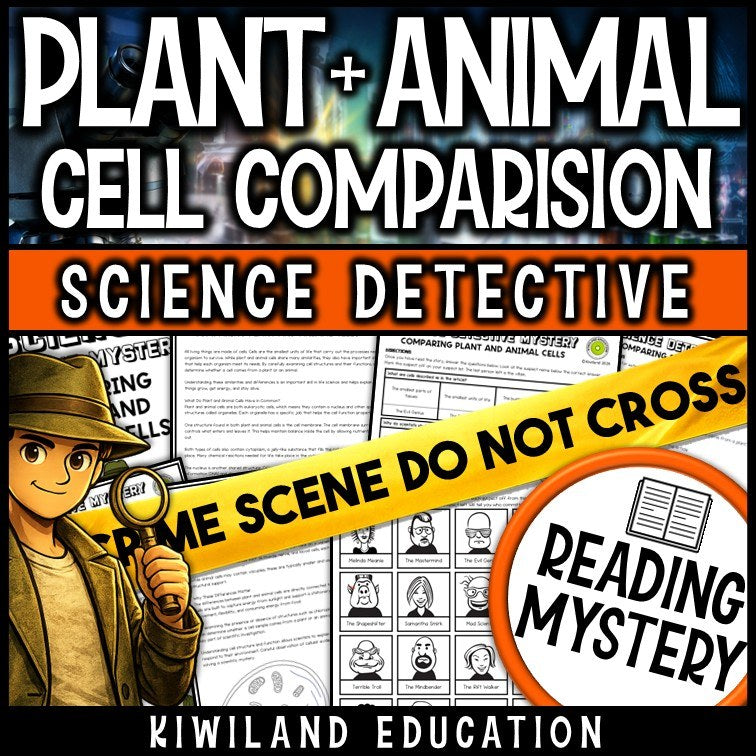
Put cells under the microscope. This printable Comparing Plant & Animal Cells Reading Mystery turns a nonfiction passage about how plant and animal cells are alike and different into a reading-detective investigation for Grades 3–6 classroom teachers, homeschoolers, and tutors. It drops straight into a life science or cells unit and turns comprehension practice into a case they want to crack.
Students read for clues, use text evidence to eliminate suspects, and close the case one answer at a time. No apps, no fuss, no prep.
Quick Details
Grade Levels: Grades 3–6
Format: Printable PDF
Resource Type: Reading Mystery worksheets
Reading Skills: Nonfiction comprehension, text evidence, main idea, compare and contrast, and inference
Tech Needed: None — no apps, locks, passwords, or student logins required
The Case
A cell mystery is waiting under the microscope, and a line-up of suspects stands ready. The only way to crack the case is to read closely about plant and animal cells — the parts they share, the parts that make them different, and what each organelle does — using every comprehension answer as a clue to rule a suspect out, until just one remains.
How the Reading Mystery Works
Students step into the role of Reading Detectives, reading about how plant and animal cells compare and knocking a suspect off the list with every text-based answer until the case is solved.
What's Included
- A "You are a detective" case-file page that sets the scene and the mission
- An engaging nonfiction passage comparing plant and animal cells (shared parts, key differences, and what each organelle does)
- Multiple-choice comprehension questions (all answers found in the text)
- Open-ended comprehension questions
- A suspect line-up page for eliminating suspects one clue at a time
- Vocabulary support and extension activities for early finishers
- A full answer key
- Color and black-and-white versions
- Print-and-go PDF format
Skills Covered
- Reading and understanding nonfiction science text
- Finding and using text evidence
- Identifying main idea and supporting details
- Compare and contrast and drawing inferences
- Science vocabulary in context
- Logic, reasoning, and critical thinking
Best Used For
- Life science and cells units and review
- Nonfiction and science reading comprehension
- Reading and science centers, early finishers, and sub plans
- Small groups and intervention
- Homeschool reading and science