
1st grade worksheets & activities
Adding and subtracting within 20, counting to 120, tens and ones, telling time to the half hour and shapes, solved one detective case at a time. Plus science, ELA, social studies and phonics cases below.
Start here
Three ways in, depending on what you need this week.
The games room
Whole-class games you put on the board and play together. No logins, nothing to set up.
Play a game →
1 More, 1 Less, 10 More, 10 Less
1.NBT.C.5 · back to school
See the case file →
Addition Within 20 Escape Room
1.OA.C.6 · winter · digital
See the case file →Every 1st grade math skill
Grouped the way the Common Core standards are, so you can find the pack for the unit you're teaching right now.
 Professor Pip
Operations & algebraic thinking
1.OA.A.1Word problems within 20Case open1.OA.A.2Add three numbersCase open1.OA.B.3Properties of operationsCase open1.OA.B.4Subtraction as unknown addendCase open1.OA.C.5Count on to add & subtractCase open1.OA.C.6Add & subtract within 20Case open1.OA.D.7Meaning of the equal signCase open1.OA.D.8Missing numbers in equationsCase open
 Subtraction Within 20 Winter Digital Escape Room1.OA.C.6 · Add & subtract within 20See the case file →
 Addition Within 20 Winter Digital Escape Room1.OA.C.6 · Add & subtract within 20See the case file →
 Adding Near Doubles Digital Escape Room1.OA.C.6 · Add & subtract within 20See the case file →
 Addition and Subtraction Within 201.OA.C.6 · Add & subtract within 20See the case file →
 Addition and Subtraction Within 201.OA.C.6 · Add & subtract within 20See the case file →
 Uncle Umbrage
Number & operations in base ten
1.NBT.A.1Count to 120Case open1.NBT.B.2Tens & onesCase open1.NBT.B.3Compare two-digit numbersCase open1.NBT.C.4Add within 100Case open1.NBT.C.510 more & 10 lessCase open1.NBT.C.6Subtract multiples of 10Case open
 2-Digit Addition Without Regrouping1.NBT.C.4 · Add within 100See the case file →
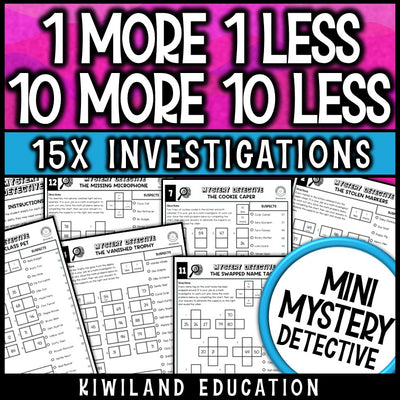 1 More 1 Less 10 More 10 Less1.NBT.C.5 · 10 more & 10 lessSee the case file →
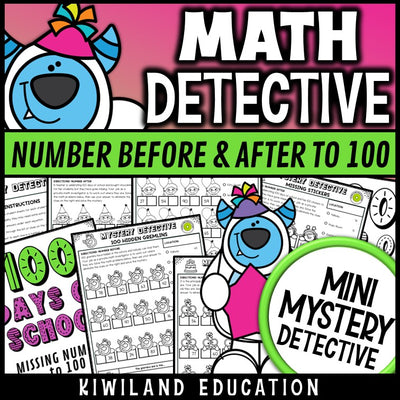 100th Day of School Missing Numbers to 100 Mystery Detective Activity1.NBT.A.1 · Count to 120See the case file →
 Number Order to 100 Digital Escape Room1.NBT.B.3 · Compare two-digit numbersSee the case file →
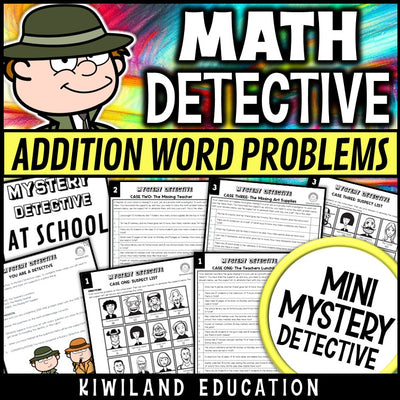 Back to School Addition Word Problems Within 100 Math Detective Mystery1.NBT.C.4 · Add within 100See the case file →
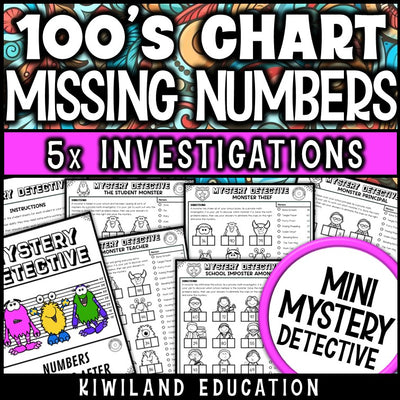 100s Chart Missing Numbers Within 100 Monster Mystery Detective Activity1.NBT.A.1 · Count to 120See the case file →
 Addition & Subtraction Word Problems Within 1001.NBT.C.4 · Add within 100See the case file →
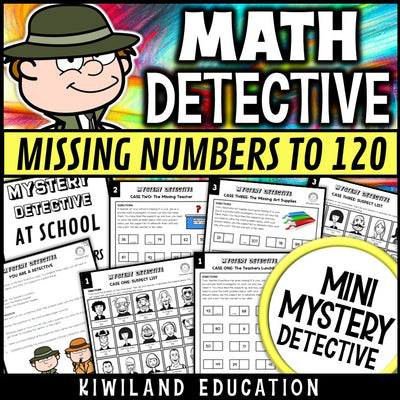 Missing Numbers to 1201.NBT.A.1 · Count to 120See the case file →
 Mailman Max
Measurement & data
1.MD.A.1Order by lengthCase open1.MD.A.2Measure length with unitsCase open1.MD.B.3Time to the hour & half hourCase open1.MD.C.4Organize & read dataCase open
 Tally Charts and Frequency Tables1.MD.C.4 · Organize & read dataSee the case file →
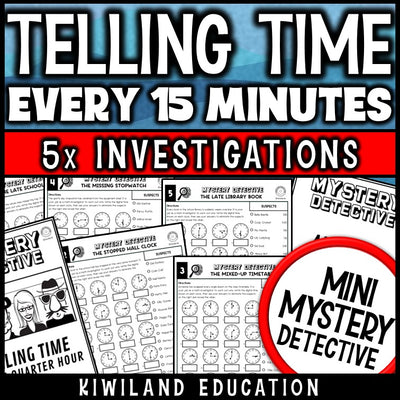 Telling Time to Quarter Hour1.MD.B.3 · Time to the hour & half hourSee the case file →
 Telling Time to the Hour & Half Hour Digital Escape Room1.MD.B.3 · Time to the hour & half hourSee the case file →
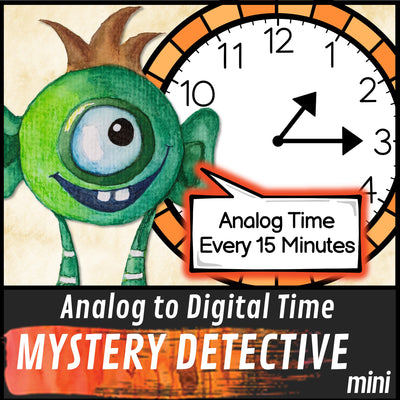 Telling Time to 15 Minutes1.MD.B.3 · Time to the hour & half hourSee the case file →
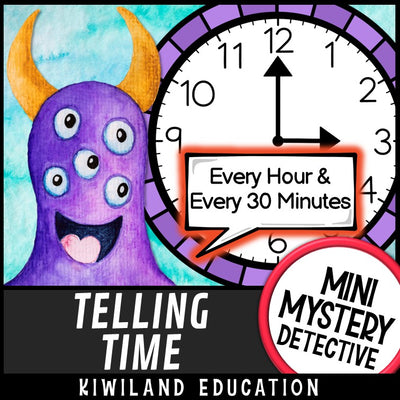 Telling Time to the Hour and Half Hour1.MD.B.3 · Time to the hour & half hourSee the case file →
 Zippy Zoe
Geometry
1.G.A.1Shape attributesCase open1.G.A.2Compose shapesCase open1.G.A.3Halves & fourthsCase open
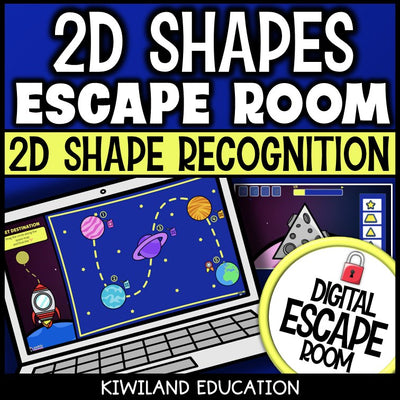 2D Shapes Digital Escape Room1.G.A.1 · Shape attributesSee the case file →
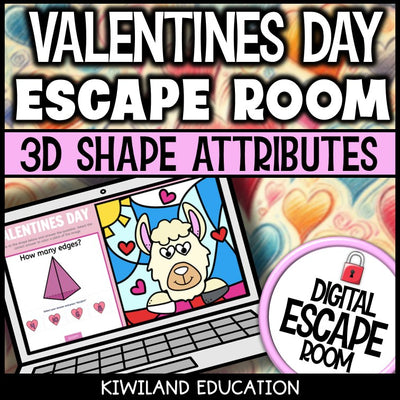 3D Shape Attributes Digital Escape Room1.G.A.1 · Shape attributesSee the case file →
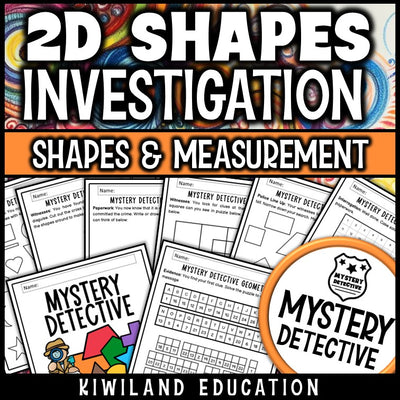 2D Shapes Geometry CSI Mystery Worksheets1.G.A.1 · Shape attributesSee the case file →
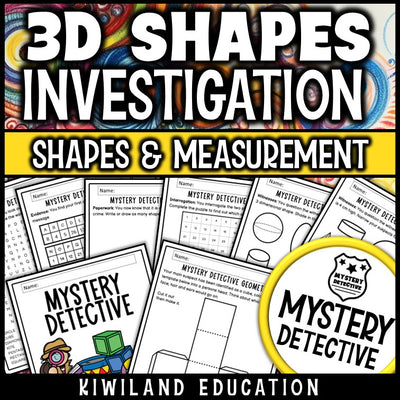 3D Shapes Geometry CSI Mystery Worksheets1.G.A.1 · Shape attributesSee the case file →
Review & escape rooms
ReviewTest prep & end-of-yearEscape roomsPrintable & digitalSeasonalHoliday-themed practice
 1st & 2nd Grade Farm Escape RoomPrintable end-of-year reviewSee it on TPT ↗
 Museum Escape Room, Grades 1–2Printable reviewSee it on TPT ↗
 Zoo Escape Room: Skip CountingPrintable · skip counting & additionSee it on TPT ↗
 Mother's Day Escape Room, Grades 1–2Printable · MaySee it on TPT ↗
 Add & Subtract Test Prep Escape Room1.NBT.C.4 · digital reviewSee it on TPT ↗
Reading, science & more
The same detective format: every right answer clears a suspect. Pick a subject below or from the bar at the top.


 Easter Map Skills Escape RoomDigital escape room · Grades 1–3See the case file →
 Needs & Wants Escape RoomDigital escape room · Grades 1–2See the case file →
 Map Skills Escape RoomDigital escape room · Grades 1–2See the case file →
 Thanksgiving Needs & Wants Escape RoomDigital escape room · Grades K–2See the case file →
 Christmas CVC Words Escape RoomDigital escape room · Grades K–1See the case file →
 Christmas CVCe Words Escape RoomDigital escape room · Grades 1–2See the case file →
 Easter R-Controlled VowelsColor by code · Grades 1–2See the case file →
 Summer Tricky Words Escape RoomDigital escape room · Grades 1–3See the case file →
 Summer Vowel Teams AI & AY Escape RoomDigital escape room · Grades 1–2See the case file →
 Earth Day CVC Words Color by CodeColor by code · Grades K–1See the case file →
 Winter CVCe Words Escape RoomDigital escape room · Grades 1–2See the case file →
 Summer Vowel Teams EE & EA Escape RoomDigital escape room · Grades 1–2See the case file →
 Easter CVC Words Color by CodeColor by code · Grades K–1See the case file →
 Summer CVC Words Escape RoomDigital escape room · Grades K–1See the case file →
Escape rooms & games
Addition and subtraction within 100CVC wordsCountingMap skillsNeeds and wants
 Christmas Add & Subtract Within 100Digital escape room · Grades 1–3See the case file →
 Valentine's Day Adding Near DoublesDigital escape room · Grades 1–2See the case file →
 2-Digit Addition Within 100 Escape RoomDigital escape room · Grades 1–3See the case file →
 Christmas Counting to 20 Escape RoomDigital escape room · Grades K–1See the case file →Christmas CVC Words Escape RoomDigital escape room · Grades K–1See the case file →Christmas CVCe Words Escape RoomDigital escape room · Grades 1–2See the case file →
 Summer Water Safety Escape RoomDigital escape room · Grades K–2See the case file →Easter Map Skills Escape RoomDigital escape room · Grades 1–3See the case file →Needs & Wants Escape RoomDigital escape room · Grades 1–2See the case file →
 Number Order to 100 Escape RoomDigital escape room · Grades 1–2See the case file →
The year planner
One math suggestion a month that matches where most classes are in the curriculum.
Reading for 1st grade teachers
Classroom ideas, sub-day plans and seasonal activities.

Summer Activities That Stop the Slide: For Summer School, Home and the Last Week
For the teacher finishing in June, the summer school teacher and the parent asking what to do in July: small, regular, self-checking work on...
Read the post →
End of Year Activities After Testing: A Plan for the Last Four Weeks
Fifteen to twenty teaching days after the test, planned as a last pass through the year's skills the class will actually finish. Grades 2–9.
Read the post →
Spring Activities for Testing Season: Easter, Earth Day and the Weeks Between
Built for the days around state testing: short, quiet, self-checking and still on standard. Spring, Easter and Earth Day, K–8.
Read the post →
St. Patrick's Day Activities, and the March Review Before Testing
March is the last clear run before state testing. A St. Patrick's week plan, plus the review days around it, for Grades 1–8.
Read the post →
February Activities That Still Teach: Groundhog Day, the 100th Day, Valentine's Day and Presidents' Day
Four holidays in the shortest month. A date-by-date plan with self-checking math cases, reading mysteries and digital escape rooms for K–9.
Read the post →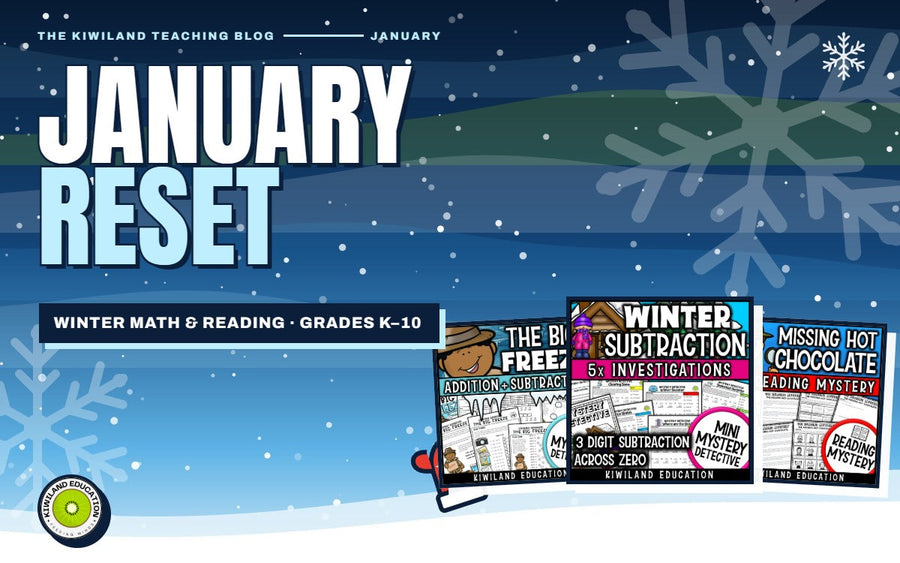
Winter Activities for the First Week Back: A January Reset Plan
The first week of January is a review week, not a fresh start. A first-week-back plan for winter math and reading that puts December...
Read the post →Grade 1 FAQ
What math do 1st graders learn?
Common Core 1st grade math covers operations and algebraic thinking, number and operations in base ten, measurement and data, and geometry. The four focus areas are addition and subtraction within 20, place value with tens and ones, measuring length with units, and reasoning about the attributes of shapes. Students also count to 120, tell time to the half hour and organize simple data.
What addition and subtraction facts should 1st graders know?
First graders add and subtract within 20 using strategies such as counting on, making 10, doubles and near doubles, and relating subtraction to addition (1.OA.C.6). By the end of the year they should be fluent with addition and subtraction within 10. They also solve word problems within 20 and find the unknown number in equations such as 8 + ? = 11.
How high should 1st graders count?
First graders count to 120 starting at any number, and read and write numerals to 120 (1.NBT.A.1). They learn that a two-digit number is made of tens and ones and use that to compare two-digit numbers with the symbols >, = and <.
What does 10 more and 10 less mean in 1st grade?
Standard 1.NBT.C.5 asks students to find 10 more or 10 less than a two-digit number in their head, without counting, and explain how they did it. For example, 10 more than 47 is 57 because the tens digit goes up by one. A hundreds chart makes the pattern easy to see.
When do 1st graders learn to tell time?
Telling time starts in 1st grade. Students tell and write time in hours and half hours on analog and digital clocks (1.MD.B.3). Telling time to the nearest five minutes follows in 2nd grade.
What subjects do you have for 1st grade?
Math is the biggest set, with cases for every grade-level standard listed above. There are also science, ELA, social studies, phonics activities in the same detective format: students solve each question, match the answer to a suspect and cross suspects off until one is left.