
Pre-K & kindergarten worksheets & activities
Counting objects to 20, counting to 100, ten frames, number bonds to 10 and naming shapes, with hands-on worksheets and digital escape rooms. Plus science, social studies and phonics cases below.
Start here
Three ways in, depending on what you need this week.


Every pre-k & k math skill
Grouped the way the Common Core standards are, so you can find the pack for the unit you're teaching right now.
 Pixel Pete
Counting & cardinality
K.CC.A.1Count to 100 by ones & tensCase openK.CC.A.2Count on from a numberCase openK.CC.A.3Write numbers 0–20Case openK.CC.B.4Count to tell how manyCase openK.CC.B.5Count up to 20 objectsCase openK.CC.C.6Compare groups of objectsCase openK.CC.C.7Compare numbers 1–10Case open
 100th Day of School Missing Numbers to 100 Mystery Detective ActivityK.CC.A.1 · Count to 100 by ones & tensSee the case file →
 Earth Day Number After to 100 Color by NumberK.CC.A.2 · Count on from a numberSee the case file →
 100s Chart Missing Numbers Within 100 Monster Mystery Detective ActivityK.CC.A.1 · Count to 100 by ones & tensSee the case file →
 Counting to 20 Summer Digital Escape RoomK.CC.A.1 · Count to 100 by ones & tensSee the case file →
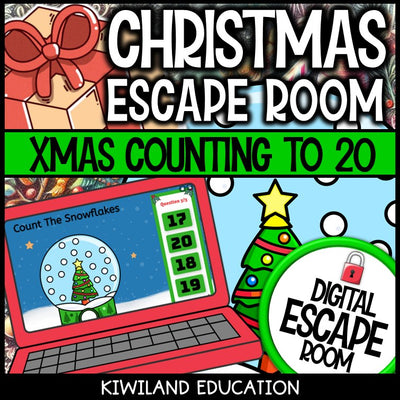 Counting to 20 Christmas Digital Escape RoomK.CC.A.1 · Count to 100 by ones & tensSee the case file →
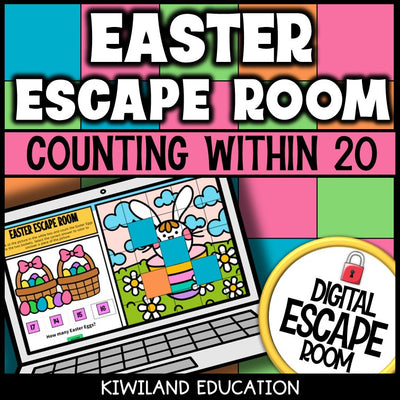 Easter Counting Within 20 Color by NumberK.CC.A.1 · Count to 100 by ones & tensSee the case file →
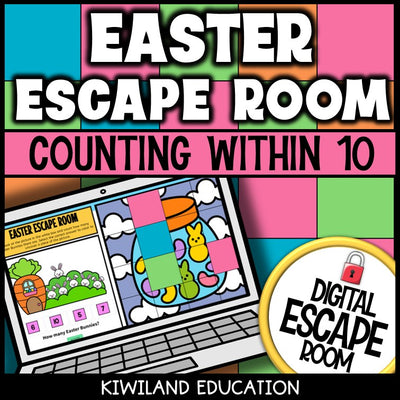 Easter Counting Within 10 Color by NumberK.CC.A.1 · Count to 100 by ones & tensSee the case file →
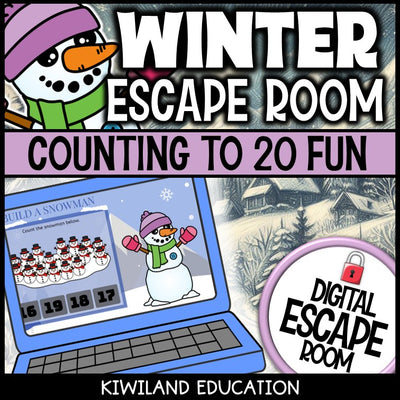 Counting to 20 Winter Digital Escape RoomK.CC.A.1 · Count to 100 by ones & tensSee the case file →
 Sneaky Sal
Operations & algebraic thinking
K.OA.A.1Add & subtract with objectsCase openK.OA.A.2Word problems within 10Case openK.OA.A.3Break apart numbers to 10Case openK.OA.A.4Make 10Case openK.OA.A.5Add & subtract within 5Case open
 Lady Lavish
Number & operations in base ten
K.NBT.A.1Teen numbers: ten & onesCase open
 Big Bruno
Measurement & data
K.MD.A.1Describe measurable attributesCase openK.MD.A.2Compare two objectsCase openK.MD.B.3Sort & count by categoryCase open
 Duke Dazzle
Geometry
K.G.A.1Positions of shapesCase openK.G.A.2Name shapesCase openK.G.A.3Flat & solid shapesCase openK.G.B.4Compare shapesCase openK.G.B.5Build shapesCase openK.G.B.6Put shapes togetherCase open

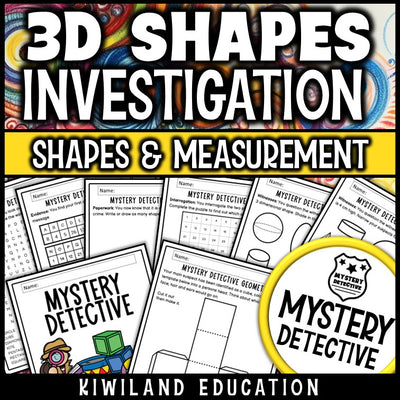
Shapes & seasonal escape rooms
K.G.A.1Describe shapes & positionsK.G.A.2Name shapesK.CC.B.5Count to tell how manyEscape roomsDigital, by season
 2D Shapes Escape RoomK.G.A.2 · name shapes · digitalSee the case file →
 Winter Counting Escape RoomK.CC.B.5 · digitalSee the case file →
 Valentine's Day Counting Escape RoomK.CC.B.5 · digitalSee it on TPT ↗
 St. Patrick's Day Counting Escape RoomK.CC.B.5 · digitalSee it on TPT ↗
 Easter Counting Color by NumberK.CC.B.5 · digital escape roomSee the case file →
Reading, science & more
The same detective format: every right answer clears a suspect. Pick a subject below or from the bar at the top.
 Christmas CVC Words Escape RoomDigital escape room · Grades K–1See the case file →
 Earth Day CVC Words Color by CodeColor by code · Grades K–1See the case file →
 Easter CVC Words Color by CodeColor by code · Grades K–1See the case file →
 Summer CVC Words Escape RoomDigital escape room · Grades K–1See the case file →
 Winter CVC Words Escape RoomDigital escape room · Grades K–1See the case file →
Escape rooms & games
CVC wordsCountingNeeds and wantsAddition factsSubtraction facts
 Winter Addition Within 20 Escape RoomDigital escape room · Grades K–2See the case file →
 Christmas Counting to 20 Escape RoomDigital escape room · Grades K–1See the case file →Christmas CVC Words Escape RoomDigital escape room · Grades K–1See the case file →
 Summer Water Safety Escape RoomDigital escape room · Grades K–2See the case file →
 Thanksgiving Needs & Wants Escape RoomDigital escape room · Grades K–2See the case file →
 Winter Subtraction Within 20 Escape RoomDigital escape room · Grades K–2See the case file →
 Summer Counting to 20 Escape RoomDigital escape room · Grades K–1See the case file →Summer CVC Words Escape RoomDigital escape room · Grades K–1See the case file →
 Winter Counting to 20 Escape RoomDigital escape room · Grades K–1See the case file →Winter CVC Words Escape RoomDigital escape room · Grades K–1See the case file →
The year planner
One math suggestion a month that matches where most classes are in the curriculum.
Reading for pre-k & k teachers
Classroom ideas, sub-day plans and seasonal activities.

Summer Activities That Stop the Slide: For Summer School, Home and the Last Week
For the teacher finishing in June, the summer school teacher and the parent asking what to do in July: small, regular, self-checking work on...
Read the post →
End of Year Activities After Testing: A Plan for the Last Four Weeks
Fifteen to twenty teaching days after the test, planned as a last pass through the year's skills the class will actually finish. Grades 2–9.
Read the post →
Spring Activities for Testing Season: Easter, Earth Day and the Weeks Between
Built for the days around state testing: short, quiet, self-checking and still on standard. Spring, Easter and Earth Day, K–8.
Read the post →
St. Patrick's Day Activities, and the March Review Before Testing
March is the last clear run before state testing. A St. Patrick's week plan, plus the review days around it, for Grades 1–8.
Read the post →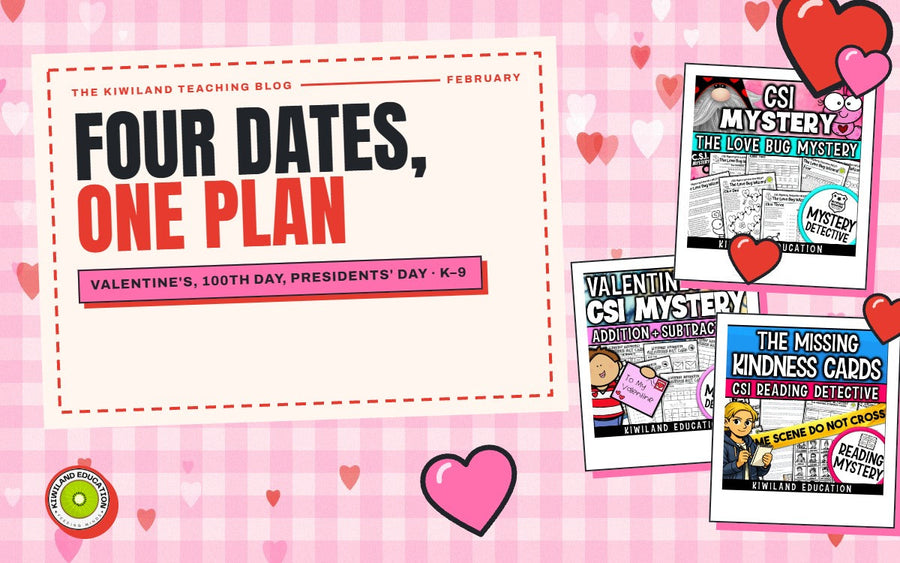
February Activities That Still Teach: Groundhog Day, the 100th Day, Valentine's Day and Presidents' Day
Four holidays in the shortest month. A date-by-date plan with self-checking math cases, reading mysteries and digital escape rooms for K–9.
Read the post →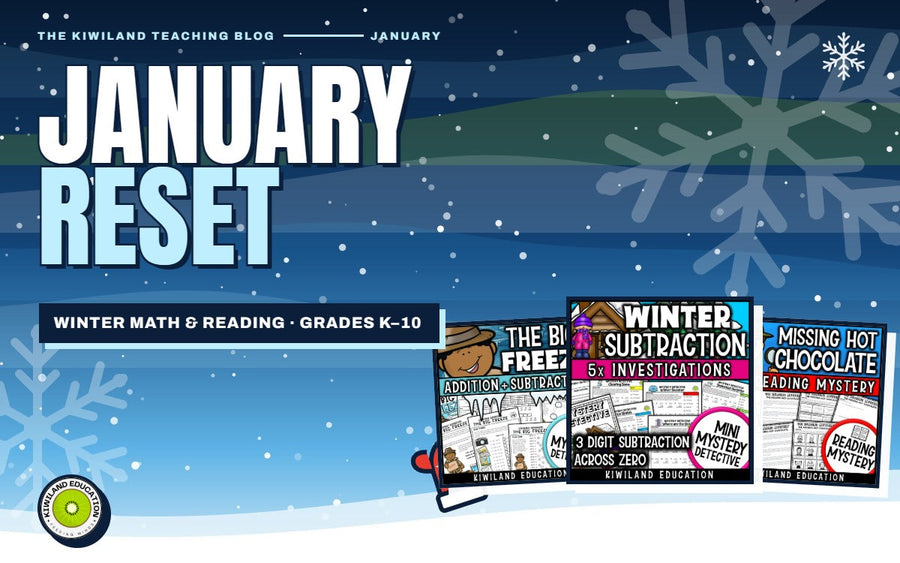
Winter Activities for the First Week Back: A January Reset Plan
The first week of January is a review week, not a fresh start. A first-week-back plan for winter math and reading that puts December...
Read the post →Pre-K & K FAQ
What math do kindergartners learn?
Common Core kindergarten math has five domains: counting and cardinality, operations and algebraic thinking, number and operations in base ten, measurement and data, and geometry. Most of the year goes to two big ideas: representing and comparing whole numbers with sets of objects, and describing shapes and space. Students also add and subtract within 10 and start to see the numbers 11 to 19 as ten ones and some more ones.
How high should a kindergartner count by the end of the year?
By the end of kindergarten, students should count to 100 by ones and by tens (K.CC.A.1) and count forward from any given number instead of starting at 1 (K.CC.A.2). They should also count up to 20 objects to answer "how many?" and write the numbers 0 to 20.
What addition and subtraction do kindergartners learn?
Kindergartners add and subtract within 10 using objects, fingers, drawings and equations, and solve simple word problems (K.OA.A.1–2). They break numbers up to 10 into pairs, find the number that makes 10 with any number from 1 to 9 (K.OA.A.4), and become fluent with addition and subtraction within 5 (K.OA.A.5).
What shapes should kindergartners know?
Kindergartners name squares, circles, triangles, rectangles and hexagons, plus the solid shapes cubes, cones, cylinders and spheres, whatever their size or orientation (K.G.A.2). They also describe where objects are using words such as above, below, beside and next to, and tell flat shapes from solid ones.
What math should children know before kindergarten?
The Common Core standards start in kindergarten, so pre-K goals come from each state's early learning guidelines. Most expect children to count to at least 10 or 20, count small groups of objects one by one, recognize numerals to 10, compare which group has more, and name basic shapes such as circles, squares and triangles.
What subjects do you have for pre-k & k?
Math is the biggest set, with cases for every core standard listed above. There are also science, social studies, phonics activities in the same detective format: students solve each question, match the answer to a suspect and cross suspects off until one is left.