
7th grade worksheets & activities
Proportional relationships and percents, integer operations, two-step equations, circles and angles, and probability, all solved as detective cases. Plus science, ELA and social studies cases below.
Start here
Three ways in, depending on what you need this week.

Every 7th grade math skill
Grouped the way the Common Core standards are, so you can find the pack for the unit you're teaching right now.
 Marcel Mime
Ratios & proportional relationships
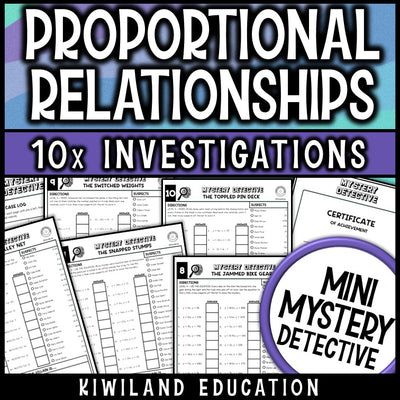
7.RP.A.1Unit rates with fractionsCase open7.RP.A.2Proportional relationshipsCase open7.RP.A.3Percent problemsCase open
 Rocket Rita
The number system
7.NS.A.1Add & subtract rational numbersCase open7.NS.A.2Multiply & divide rational numbersCase open7.NS.A.3Rational number word problemsCase open
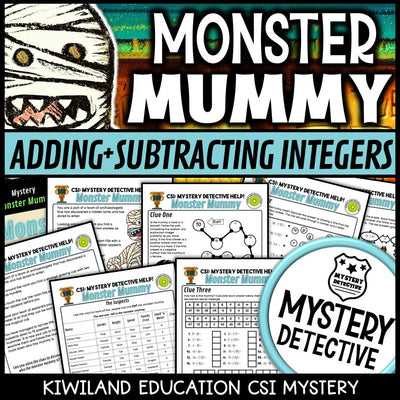 Adding & Subtracting Integers CSI Mystery Worksheets7.NS.A.1 · Add & subtract rational numbersSee the case file →
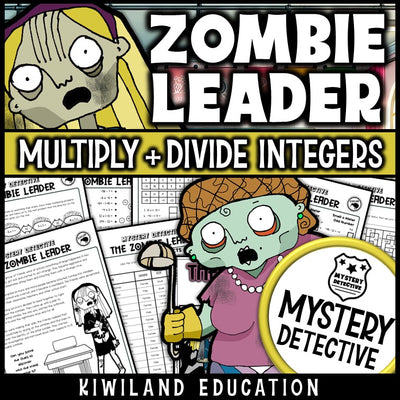 Multiply & Divide Integers CSI Mystery Worksheets7.NS.A.2 · Multiply & divide rational numbersSee the case file →
 Adding & Subtracting Integers7.NS.A.1 · Add & subtract rational numbersSee the case file →
 Adding & Subtracting Integers CSI Mystery Worksheets7.NS.A.1 · Add & subtract rational numbersSee the case file →
 Adding & Subtracting Integers CSI Mystery Worksheets7.NS.A.1 · Add & subtract rational numbersSee the case file →
 Adding & Subtracting Integers Digital Escape Room7.NS.A.1 · Add & subtract rational numbersSee the case file →
 Adding & Subtracting Integers Digital Escape Room7.NS.A.1 · Add & subtract rational numbersSee the case file →
 Converting Fractions Decimals and Percentages7.NS.A.2 · Multiply & divide rational numbersSee the case file →
 Madame Mystic
Expressions & equations
7.EE.A.1Expand & factor expressionsCase open7.EE.A.2Rewrite expressionsCase open7.EE.B.3Multi-step problemsCase open7.EE.B.4Equations & inequalitiesCase open
 Combining Like Terms Digital Escape Room7.EE.A.1 · Expand & factor expressionsSee the case file →
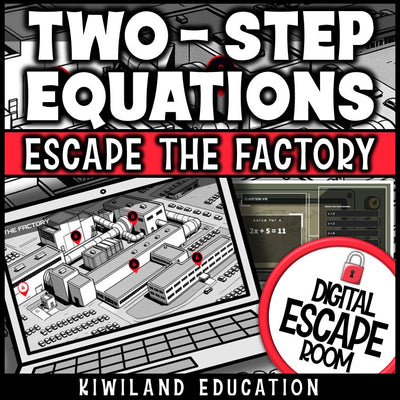 Two-Step Equations Digital Escape Room7.EE.B.4 · Equations & inequalitiesSee the case file →
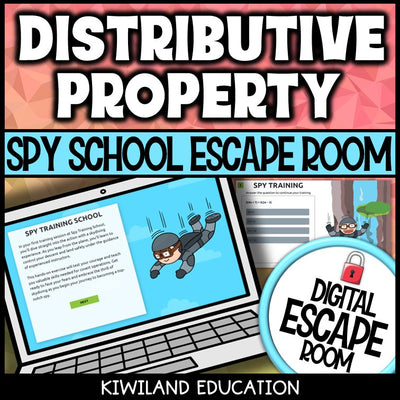 Distributive Property with Combining Like Terms Digital Escape Room7.EE.A.1 · Expand & factor expressionsSee the case file →
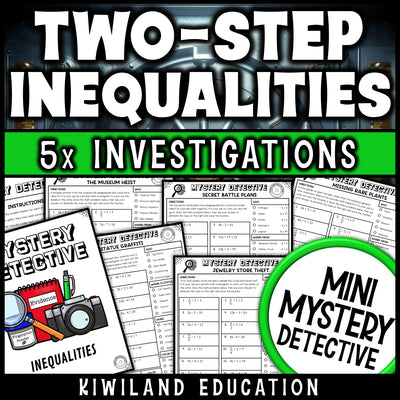 Solving Two-Step & Multi-Step Inequalities7.EE.B.4 · Equations & inequalitiesSee the case file →
 Two-Step Equations7.EE.B.4 · Equations & inequalitiesSee the case file →
 Combining Like Terms7.EE.A.1 · Expand & factor expressionsSee the case file →
 Chef Sizzle
Geometry
7.G.A.1Scale drawingsCase open7.G.A.2Draw shapesCase open7.G.A.3Cross sectionsCase open7.G.B.4CirclesCase open7.G.B.5Angle relationshipsCase open7.G.B.6Area, volume & surface areaCase open
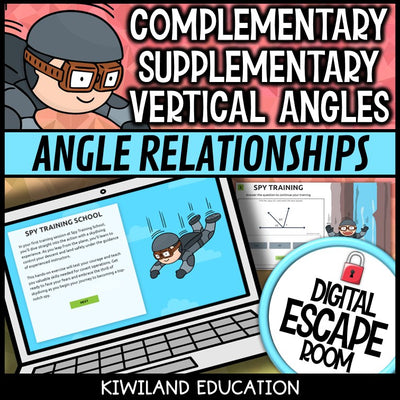 Complementary, Supplementary & Vertical Angles Digital Escape Room7.G.B.5 · Angle relationshipsSee the case file →
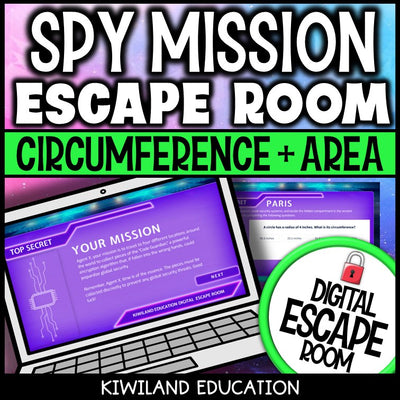 Circumference & Area of a Circle Digital Escape Room7.G.B.4 · CirclesSee the case file →
 Scale Drawings and Floor Plans7.G.A.1 · Scale drawingsSee the case file →
 Angle Relationships7.G.B.5 · Angle relationshipsSee the case file →
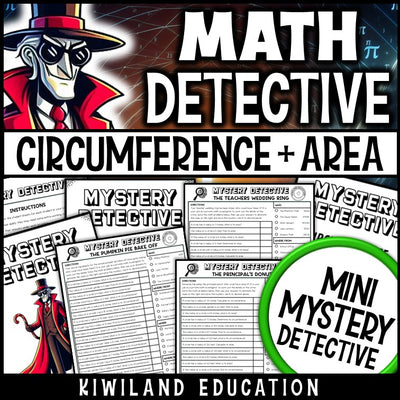 Circumference & Area of a Circle7.G.B.4 · CirclesSee the case file →
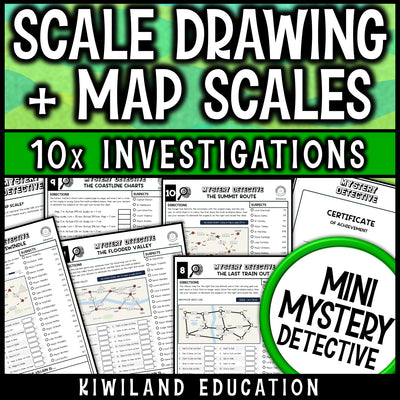 Map Scale7.G.A.1 · Scale drawingsSee the case file →
 Mona Money
Statistics & probability
7.SP.A.1SamplingCase open7.SP.A.2Inferences from samplesCase open7.SP.B.3Compare data setsCase open7.SP.B.4Compare centersCase open7.SP.C.5ProbabilityCase open7.SP.C.6Experimental probabilityCase open7.SP.C.7Probability modelsCase open7.SP.C.8Compound probabilityCase open
Sub plans, review & escape rooms
ReviewBack-to-school & end-of-yearDigitalEscape rooms for a 1:1 dayReal worldBudgeting & percent
 Most usefulMiddle School Review: Drone HeistGrades 6–8 · CSI caseSee the case file →
 6th Grade Math ReviewBack-to-school review of grade 6See the case file →
 Integers Winter Escape Room7.NS.A.1 · digital escape roomSee the case file →
 Pi Day Circles Escape Room7.G.B.4 · digital escape roomSee the case file →
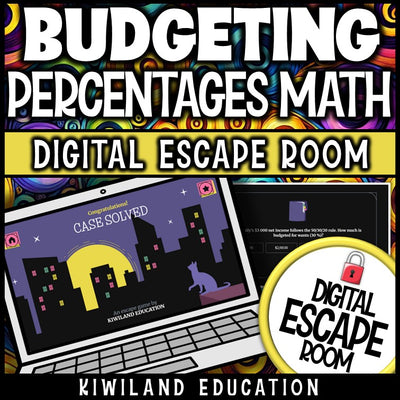
 Budgeting & Percentages Escape Room7.RP.A.3 · digital escape roomSee the case file →
Reading, science & more
The same detective format: every right answer clears a suspect. Pick a subject below or from the bar at the top.
Science
Scientific methodPhysical and chemical changesEnergyHuman impact on the environmentCells
 Cell Theory Reading MysteryReading mystery · Grades 5–8See the case file →
 Ionic & Covalent Bonds Escape RoomDigital escape room · Grades 7–9See the case file →
 Conservation of Mass Reading MysteryReading mystery · Grades 6–8See the case file →
 Electricity & Circuits Reading MysteryReading mystery · Grades 6–8See the case file →
 Kinetic & Potential Energy Escape RoomDigital escape room · Grades 6–8See the case file →
 DNA Mutations Reading MysteryReading mystery · Grades 5–8See the case file →
 Endocrine System Reading MysteryReading mystery · Grades 5–8See the case file →
 Human Impact on Environment Escape RoomDigital escape room · Grades 5–8See the case file →
 Lab Safety Escape RoomDigital escape room · Grades 6–9See the case file →
 Magnetism & ElectromagnetsReading mystery · Grades 6–8See the case file →
 Christmas Context Clues Escape RoomDigital escape room · Grades 4–7See the case file →
 6th Grade ELA Review Game ShowGame show · Grades 5–7See the case file →
 Context Clues Escape Room: Spy MissionDigital escape room · Grades 4–7See the case file →
 Halloween Context Clues Escape RoomDigital escape room · Grades 4–7See the case file →
 St. Patrick's Day Context CluesDigital escape room · Grades 4–7See the case file →
 Thanksgiving Context Clues Escape RoomDigital escape room · Grades 4–7See the case file →
 Valentine's Day Context CluesDigital escape room · Grades 4–7See the case file →
 Winter Context Clues Escape RoomDigital escape room · Grades 4–7See the case file →

Escape rooms & games
Order of operationsContext cluesOne-step equationsDecimalsScientific method
 Thanksgiving Add & Subtract FractionsDigital escape room · Grades 4–7See the case file →
 Complementary & Supplementary AnglesDigital escape room · Grades 6–8See the case file →Ionic & Covalent Bonds Escape RoomDigital escape room · Grades 7–9See the case file →
 Circumference & Area of a CircleDigital escape room · Grades 6–8See the case file →
 Combining Like Terms Escape RoomDigital escape room · Grades 6–8See the case file →Christmas Context Clues Escape RoomDigital escape room · Grades 4–7See the case file →
 Christmas Decimal Word ProblemsDigital escape room · Grades 5–7See the case file →
 Distributive Property Escape RoomDigital escape room · Grades 6–8See the case file →6th Grade ELA Review Game ShowGame show · Grades 5–7See the case file →Kinetic & Potential Energy Escape RoomDigital escape room · Grades 6–8See the case file →
The year planner
One math suggestion a month that matches where most classes are in the curriculum.
Reading for 7th grade teachers
Classroom ideas, sub-day plans and seasonal activities.

Summer Activities That Stop the Slide: For Summer School, Home and the Last Week
For the teacher finishing in June, the summer school teacher and the parent asking what to do in July: small, regular, self-checking work on...
Read the post →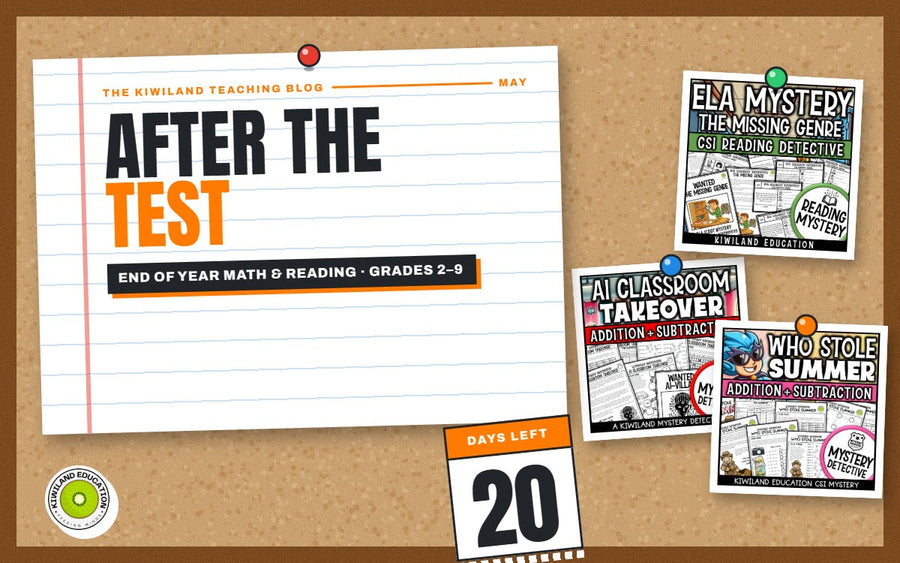
End of Year Activities After Testing: A Plan for the Last Four Weeks
Fifteen to twenty teaching days after the test, planned as a last pass through the year's skills the class will actually finish. Grades 2–9.
Read the post →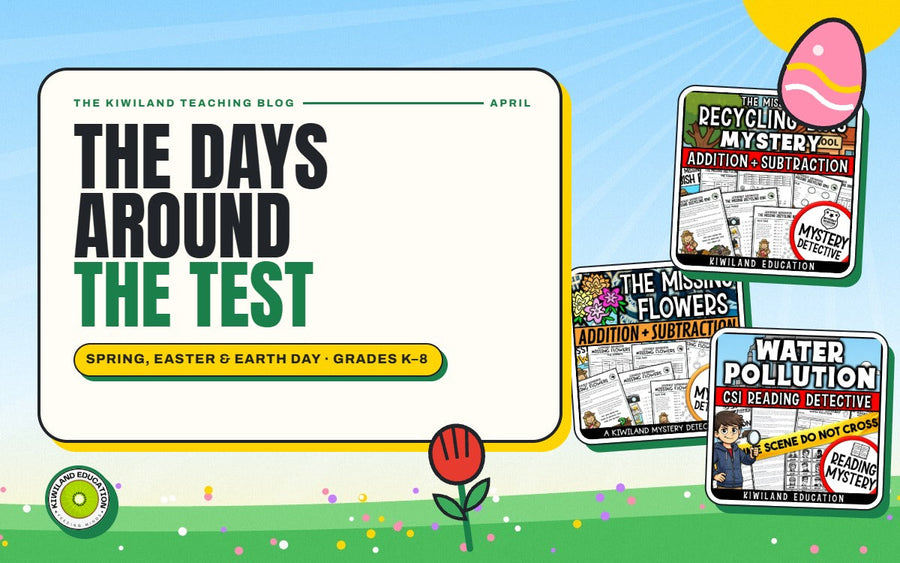
Spring Activities for Testing Season: Easter, Earth Day and the Weeks Between
Built for the days around state testing: short, quiet, self-checking and still on standard. Spring, Easter and Earth Day, K–8.
Read the post →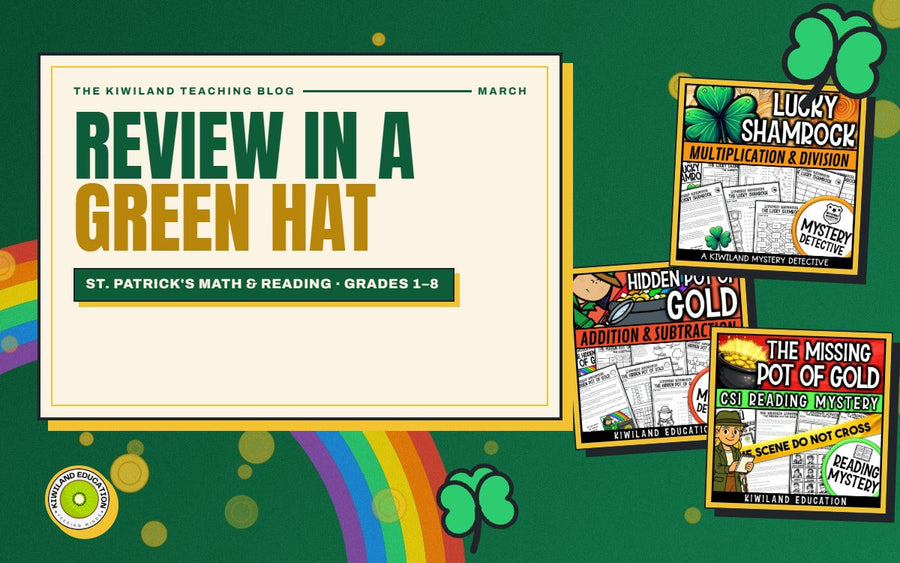
St. Patrick's Day Activities, and the March Review Before Testing
March is the last clear run before state testing. A St. Patrick's week plan, plus the review days around it, for Grades 1–8.
Read the post →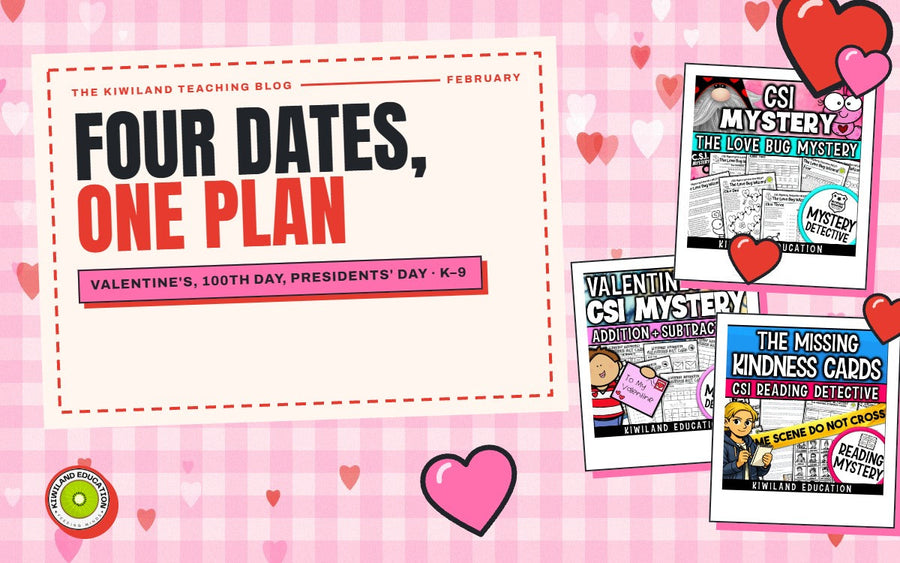
February Activities That Still Teach: Groundhog Day, the 100th Day, Valentine's Day and Presidents' Day
Four holidays in the shortest month. A date-by-date plan with self-checking math cases, reading mysteries and digital escape rooms for K–9.
Read the post →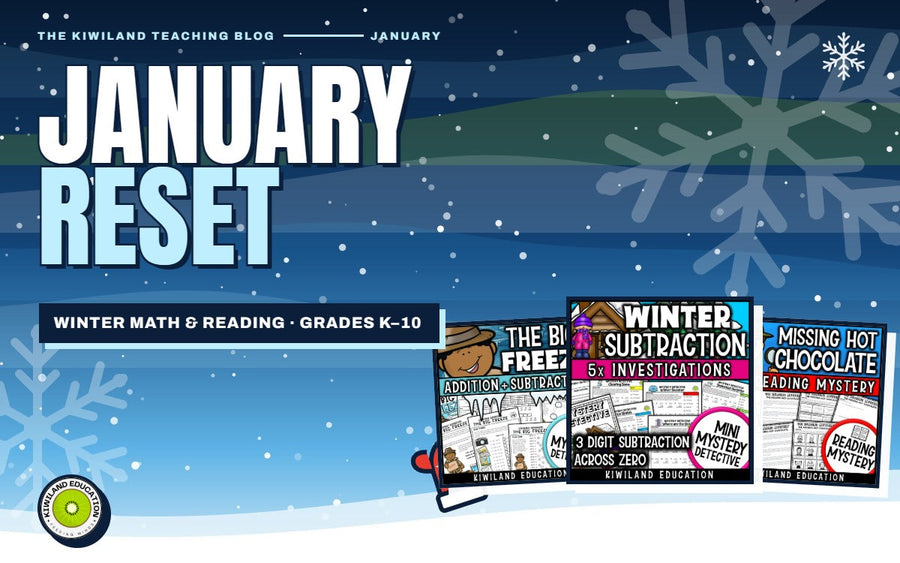
Winter Activities for the First Week Back: A January Reset Plan
The first week of January is a review week, not a fresh start. A first-week-back plan for winter math and reading that puts December...
Read the post →Grade 7 FAQ
What math do 7th graders learn?
In Common Core states, 7th grade math covers ratios and proportional relationships, the number system, expressions and equations, geometry, and statistics and probability. Students learn to recognize proportional relationships, solve percent problems, and add, subtract, multiply and divide positive and negative numbers. They also solve two-step equations and inequalities, find the area and circumference of circles, and work with probability.
What are the most important 7th grade math standards?
The Common Core names four critical areas for grade 7: proportional relationships, operations with rational numbers and linear equations, scale drawings and geometry with area, surface area and volume, and drawing inferences about populations from samples. Integer operations (7.NS.A.1 and 7.NS.A.2) and proportional relationships (7.RP.A.2) are the foundation for 8th grade algebra.
How do you teach adding and subtracting integers?
Number lines and two-color counters help students see why adding a negative moves left and why subtracting a number is the same as adding its opposite (7.NS.A.1c). Once the rules make sense, students need lots of mixed practice, including real-world contexts such as temperature, elevation and money.
What is the constant of proportionality?
The constant of proportionality is the unit rate in a proportional relationship, written as k in the equation y = kx. Students find it from tables, graphs, equations and diagrams (7.RP.A.2b). On a graph, a proportional relationship is a straight line through the origin, and k is the y-value when x = 1.
Do these 7th grade activities include answer keys?
Yes. Every printable pack includes answer keys, and the detective format is self-checking because each correct answer rules out a suspect until only one is left. The digital escape rooms check answers automatically as students enter each lock code.
What subjects do you have for 7th grade?
Math is the biggest set, with cases for every grade-level standard listed above. There are also science, ELA, social studies activities in the same detective format: students solve each question, match the answer to a suspect and cross suspects off until one is left.