
6th grade worksheets & activities
Ratios and unit rates, dividing fractions, negative numbers, one-step equations, area and volume, and data displays, all solved as detective cases. Plus reading, science, ELA and social studies cases below.
Start here
Three ways in, depending on what you need this week.
Case of the Week
A five-minute case to put on the board. Three clues, six suspects, a new lineup every time you play.
Play it now →
6th Grade Math Review
Ratios, integers & percent · spiral
See the case file →
Box Plots
6.SP.B.4 · quartiles & IQR
See the case file →Every 6th grade math skill
Grouped the way the Common Core standards are, so you can find the pack for the unit you're teaching right now.
 Doctor Fizz
Ratios & proportional relationships
6.RP.A.1RatiosCase open6.RP.A.2Unit ratesCase open6.RP.A.3Ratio & percent problemsCase open
 Ratios and Proportions Digital Escape Room6.RP.A.2 · Unit ratesSee the case file →
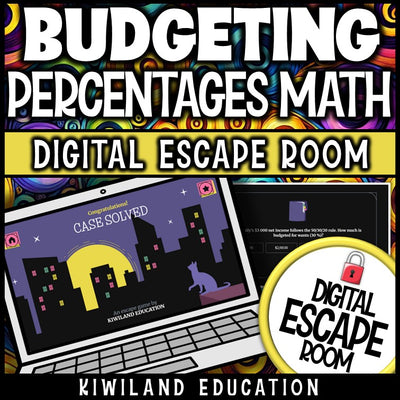 Financial Literacy Digital Escape Room6.RP.A.3 · Ratio & percent problemsSee the case file →
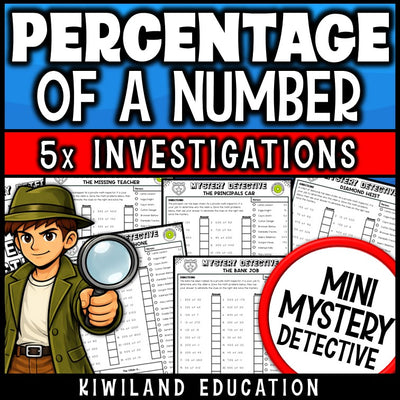 Percentage of a Number6.RP.A.3 · Ratio & percent problemsSee the case file →
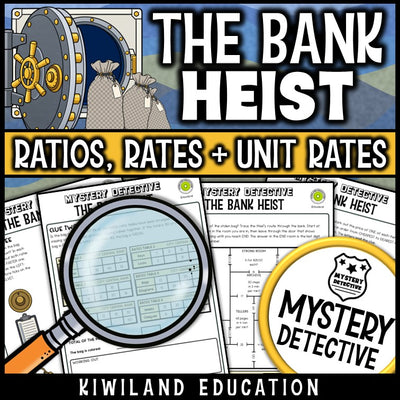 Ratios and Rates CSI Mystery Worksheets6.RP.A.2 · Unit ratesSee the case file →
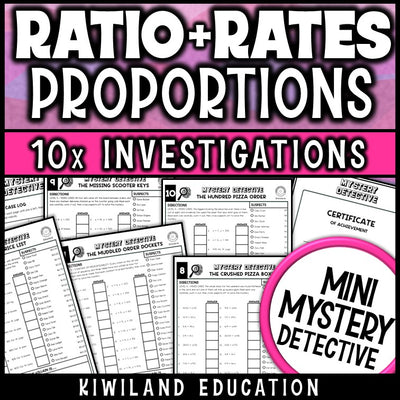 Ratios and Rates6.RP.A.2 · Unit ratesSee the case file →
 Converting Fractions Decimals and Percentages6.RP.A.3 · Ratio & percent problemsSee the case file →
 Wanda Wicked
The number system
6.NS.A.1Divide fractionsCase open6.NS.B.2Long division fluencyCase open6.NS.B.3Decimal operationsCase open6.NS.B.4GCF & LCMCase open6.NS.C.5Positive & negative numbersCase open6.NS.C.6Number line & coordinate planeCase open6.NS.C.7Absolute value & orderingCase open6.NS.C.8Four-quadrant problemsCase open
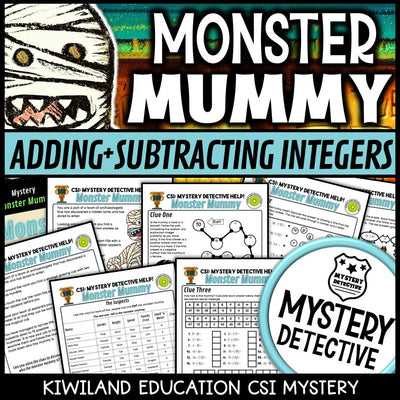 Adding & Subtracting Integers CSI Mystery Worksheets6.NS.C.5 · Positive & negative numbersSee the case file →
 Multiplying Decimals CSI Mystery Worksheets6.NS.B.3 · Decimal operationsSee the case file →
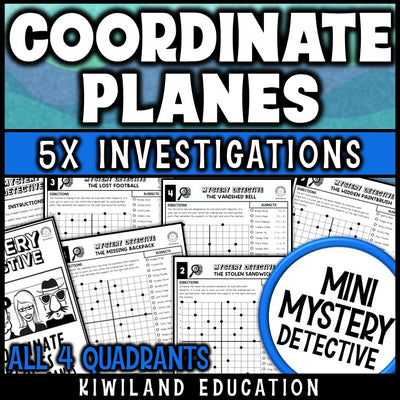 Four-Quadrant Ordered Pairs6.NS.C.8 · Four-quadrant problemsSee the case file →
 Fraction Operations (Add, Subtract, Multiply, Divide)6.NS.A.1 · Divide fractionsSee the case file →
 GCF and LCM6.NS.B.4 · GCF & LCMSee the case file →
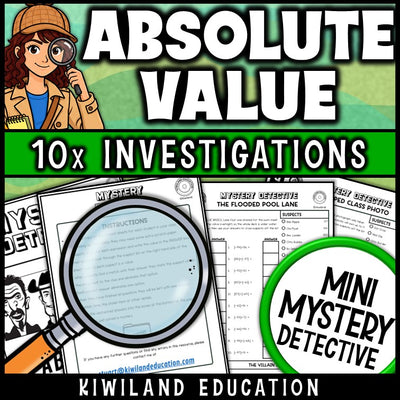 Absolute Value and Opposites6.NS.C.7 · Absolute value & orderingSee the case file →
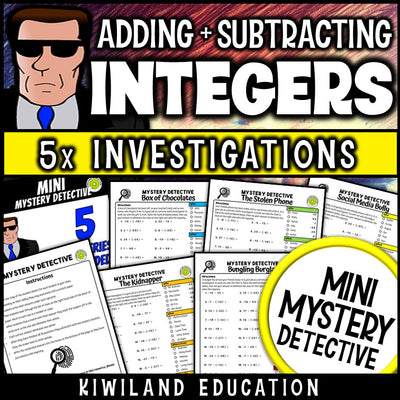 Adding & Subtracting Integers6.NS.C.5 · Positive & negative numbersSee the case file →
 Adding & Subtracting Integers CSI Mystery Worksheets6.NS.C.5 · Positive & negative numbersSee the case file →
 Magic Marvin
Expressions & equations
6.EE.A.1ExponentsCase open6.EE.A.2Write & evaluate expressionsCase open6.EE.A.3Equivalent expressionsCase open6.EE.A.4Spot equivalent expressionsCase open6.EE.B.5Solutions to equationsCase open6.EE.B.6VariablesCase open6.EE.B.7One-step equationsCase open6.EE.B.8InequalitiesCase open6.EE.C.9Dependent & independent variablesCase open
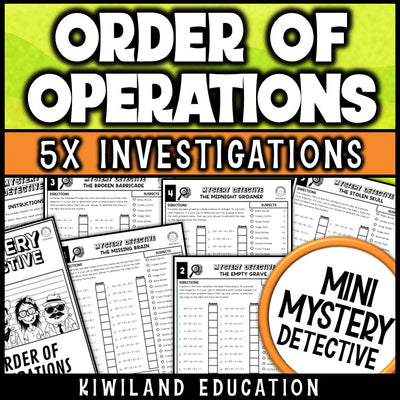 Order of Operations With Exponents6.EE.A.1 · ExponentsSee the case file →
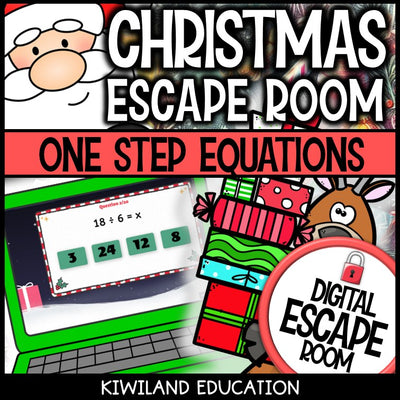 One-Step Equations Christmas Digital Escape Room6.EE.B.7 · One-step equationsSee the case file →
 Distributive Property Digital Escape Room6.EE.A.3 · Equivalent expressionsSee the case file →
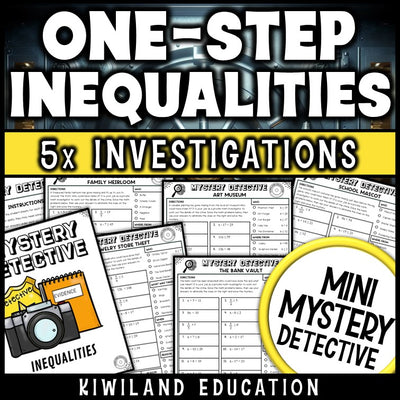 Solving One-Step Inequalities6.EE.B.8 · InequalitiesSee the case file →
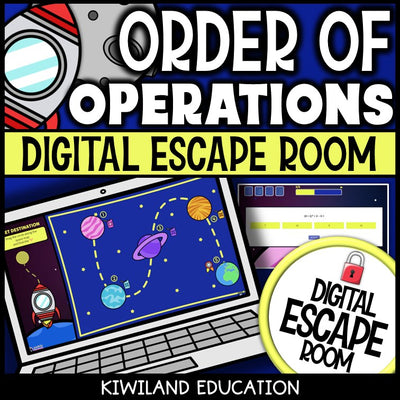 Order of Operations with Exponents Digital Escape Room6.EE.A.1 · ExponentsSee the case file →
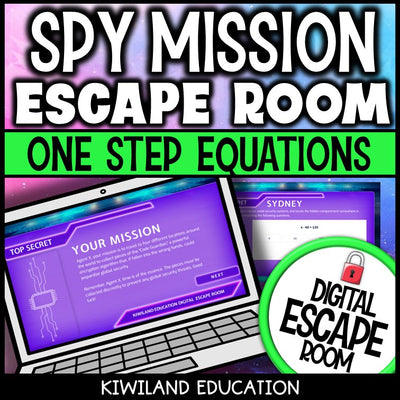 One-Step Equations Digital Escape Room6.EE.B.7 · One-step equationsSee the case file →
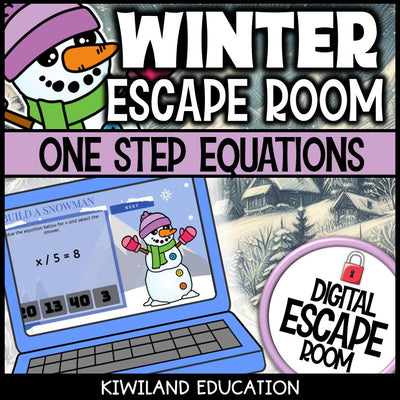 One-Step Equations Winter Digital Escape Room6.EE.B.7 · One-step equationsSee the case file →
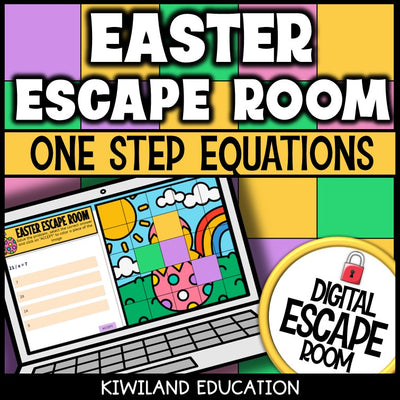 Easter One-Step Equations Color by Number6.EE.B.7 · One-step equationsSee the case file →
 Bella Bling
Geometry
6.G.A.1Area of polygonsCase open6.G.A.2Volume with fraction edgesCase open6.G.A.3Polygons on the coordinate planeCase open6.G.A.4Nets & surface areaCase open
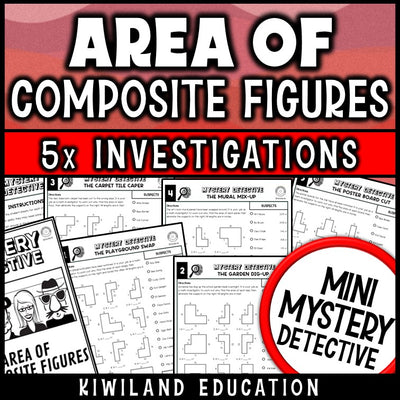
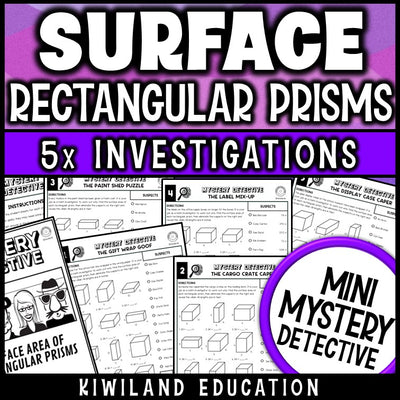
 Lady Lemon
Statistics & probability
6.SP.A.1Statistical questionsCase open6.SP.A.2Data distributionsCase open6.SP.A.3Center & variationCase open6.SP.B.4Dot plots, histograms & box plotsCase open6.SP.B.5Summarize dataCase open
 Mean, Median, Mode & Range Digital Escape Room6.SP.A.3 · Center & variationSee the case file →
 Histograms6.SP.B.4 · Dot plots, histograms & box plotsSee the case file →
 Mean, Median, Mode & Range6.SP.A.3 · Center & variationSee the case file →
 Stem and Leaf Plots6.SP.B.4 · Dot plots, histograms & box plotsSee the case file →
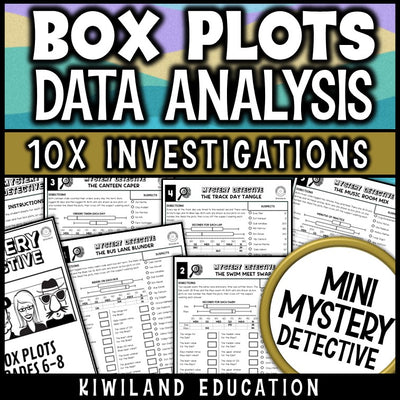 Box Plots6.SP.B.4 · Dot plots, histograms & box plotsSee the case file →
Sub plans, review & escape rooms
ReviewBack-to-school spiral reviewDigitalEscape rooms for a 1:1 dayReal worldBudgeting & percent
Most useful6th Grade Math ReviewRatios, integers & percent · spiralSee the case file → Middle School Review: Drone HeistGrades 6–8 · CSI caseSee the case file →
 Budgeting & Percentages Escape Room6.RP.A.3c · digital escape roomSee the case file →
 Mean, Median, Mode & Range Escape Room6.SP.B.5 · digital escape roomSee the case file →
 One-Step Equations: Spy Mission6.EE.B.7 · digital escape roomSee the case file →
 Distributive Property Escape Room6.EE.A.3 · digital escape roomSee the case file →
Reading, science & more
The same detective format: every right answer clears a suspect. Pick a subject below or from the bar at the top.
Reading
Reading comprehensionHolidays and traditionsFiction comprehensionMain ideaInferencing
 Cause & Effect Escape RoomDigital escape room · Grades 3–6See the case file →
 Fact & Opinion Mystery: Broken TrophyMystery worksheets · Grades 3–6See the case file →
 Dragons Fiction Reading MysteryReading mystery · Grades 3–6See the case file →
 Friendship Reading MysteryReading mystery · Grades 3–6See the case file →
 All About Witches Reading MysteryReading mystery · Grades 3–6See the case file →
 Easter Making Inferences Escape RoomDigital escape room · Grades 3–6See the case file →
 Main Idea & Details Game ShowGame show · Grades 3–6See the case file →
 Christmas: Missing SleighReading mystery · Grades 3–6See the case file →
 SEL Detective Reading MysteryReading mystery · Grades 3–6See the case file →
 Fact & Opinion Mystery: Missing MascotMystery worksheets · Grades 3–6See the case file →
Science
Habitats and adaptationsEnergyAnimals and insectsHuman impact on the environmentSharks
 All About Spiders Reading MysteryReading mystery · Grades 3–6See the case file →
 Cell Theory Reading MysteryReading mystery · Grades 5–8See the case file →
 Conservation of Mass Reading MysteryReading mystery · Grades 6–8See the case file →
 Planet Earth Reading MysteryReading mystery · Grades 3–6See the case file →
 Coral Reefs Reading MysteryReading mystery · Grades 3–6See the case file →
 Electricity & Circuits Reading MysteryReading mystery · Grades 6–8See the case file →
 Conservation of Energy Reading MysteryReading mystery · Grades 3–6See the case file →
 Droughts Reading MysteryReading mystery · Grades 3–6See the case file →
 DNA Mutations Reading MysteryReading mystery · Grades 5–8See the case file →
 Animal Adaptations Reading MysteryReading mystery · Grades 3–6See the case file →
ELA & grammar
Figurative languageContext cluesText structureELA reviewPoint of view
 Capitalization & Punctuation Task CardsTask cards · Grades 3–6See the case file →
 Christmas Context Clues Escape RoomDigital escape room · Grades 4–7See the case file →
 6th Grade ELA Review Game ShowGame show · Grades 5–7See the case file →
 Christmas Figurative LanguageDigital escape room · Grades 3–6See the case file →
 Point of View Escape RoomDigital escape room · Grades 3–6See the case file →
 Text Structure Game ShowGame show · Grades 3–6See the case file →
 Summer Joke Riddles Escape RoomDigital escape room · Grades 3–6See the case file →
 Context Clues Escape RoomDigital escape room · Grades 4–6See the case file →
 Back to School ELA Scoot Task CardsTask cards · Grades 3–6See the case file →
 Easter Figurative Language Escape RoomDigital escape room · Grades 3–6See the case file →
Social studies
Ancient civilizationsWestward expansionCivil rightsWomen's historyGovernment and civics
 Declaration of IndependenceReading mystery · Grades 3–6See the case file →
 Ancient China Reading MysteryReading mystery · Grades 3–6See the case file →
 Frida Kahlo Reading MysteryReading mystery · Grades 3–6See the case file →
 Martin Luther King Jr. Reading MysteryReading mystery · Grades 5–8See the case file →
 Digital Citizenship Reading MysteryReading mystery · Grades 4–6See the case file →
 Constitution Day Reading MysteryReading mystery · Grades 4–6See the case file →
 Abraham Lincoln Reading MysteryReading mystery · Grades 3–6See the case file →
 California Gold Rush Reading MysteryReading mystery · Grades 3–6See the case file →
 Eleanor Roosevelt Reading MysteryReading mystery · Grades 3–6See the case file →
 Ancient Egypt Reading MysteryReading mystery · Grades 3–6See the case file →
Escape rooms & games
Order of operationsContext cluesFigurative languageOne-step equationsMain idea
 Add & Subtract Unlike FractionsDigital escape room · Grades 4–6See the case file →
 Complementary & Supplementary AnglesDigital escape room · Grades 6–8See the case file →Cause & Effect Escape RoomDigital escape room · Grades 3–6See the case file →
 Circumference & Area of a CircleDigital escape room · Grades 6–8See the case file →
 Combining Like Terms Escape RoomDigital escape room · Grades 6–8See the case file →Christmas Context Clues Escape RoomDigital escape room · Grades 4–7See the case file →
 Christmas Decimal Word ProblemsDigital escape room · Grades 5–7See the case file →
 Distributive Property Escape RoomDigital escape room · Grades 6–8See the case file →6th Grade ELA Review Game ShowGame show · Grades 5–7See the case file →
 Thanksgiving Elapsed Time Escape RoomDigital escape room · Grades 3–6See the case file →
The year planner
One math suggestion a month that matches where most classes are in the curriculum.
Reading for 6th grade teachers
Classroom ideas, sub-day plans and seasonal activities.

Summer Activities That Stop the Slide: For Summer School, Home and the Last Week
For the teacher finishing in June, the summer school teacher and the parent asking what to do in July: small, regular, self-checking work on...
Read the post →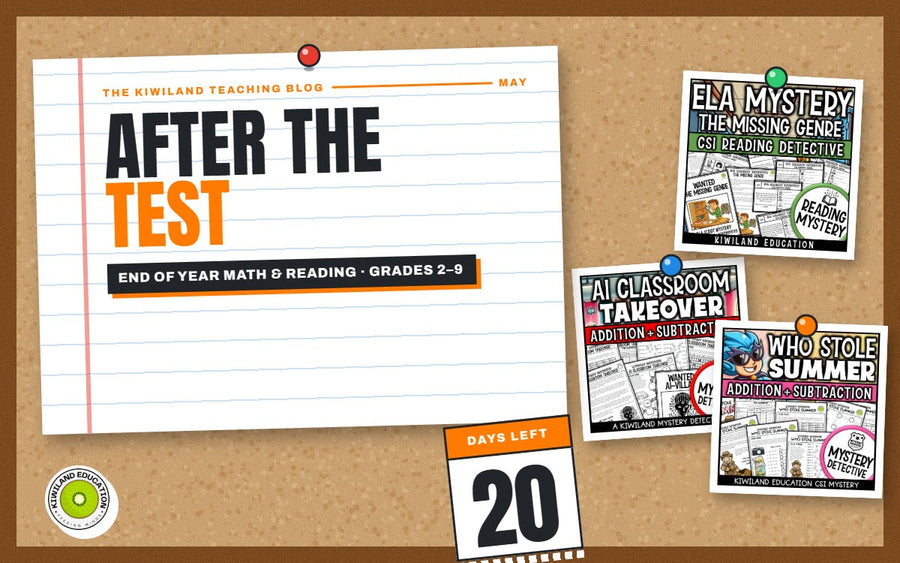
End of Year Activities After Testing: A Plan for the Last Four Weeks
Fifteen to twenty teaching days after the test, planned as a last pass through the year's skills the class will actually finish. Grades 2–9.
Read the post →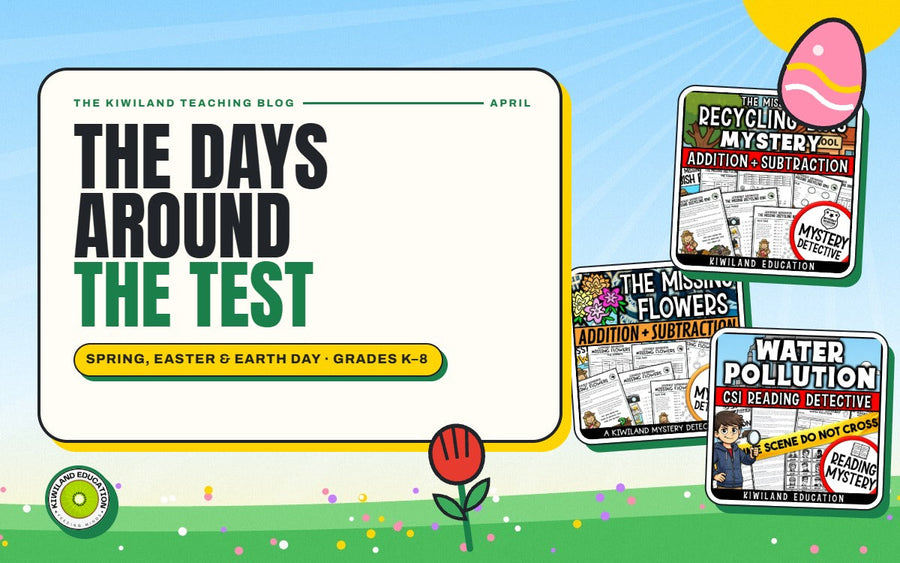
Spring Activities for Testing Season: Easter, Earth Day and the Weeks Between
Built for the days around state testing: short, quiet, self-checking and still on standard. Spring, Easter and Earth Day, K–8.
Read the post →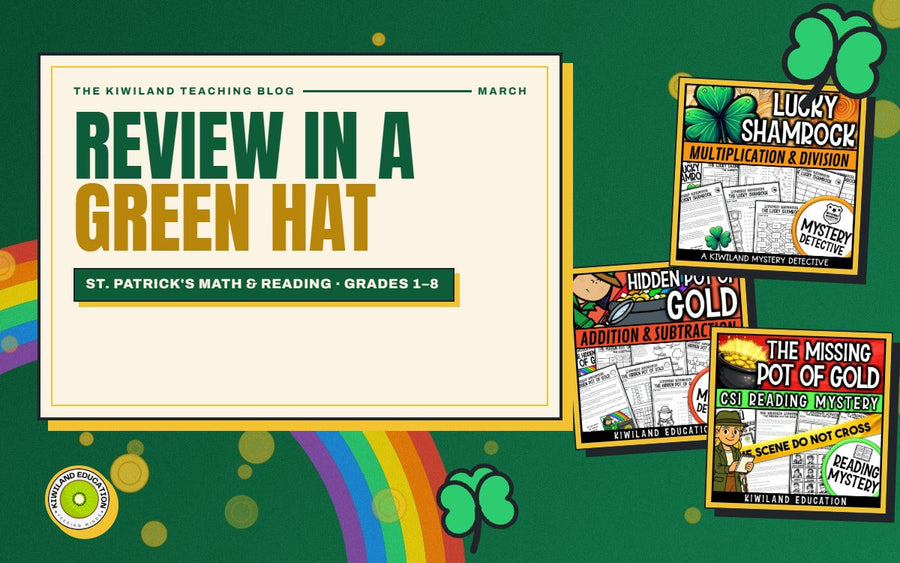
St. Patrick's Day Activities, and the March Review Before Testing
March is the last clear run before state testing. A St. Patrick's week plan, plus the review days around it, for Grades 1–8.
Read the post →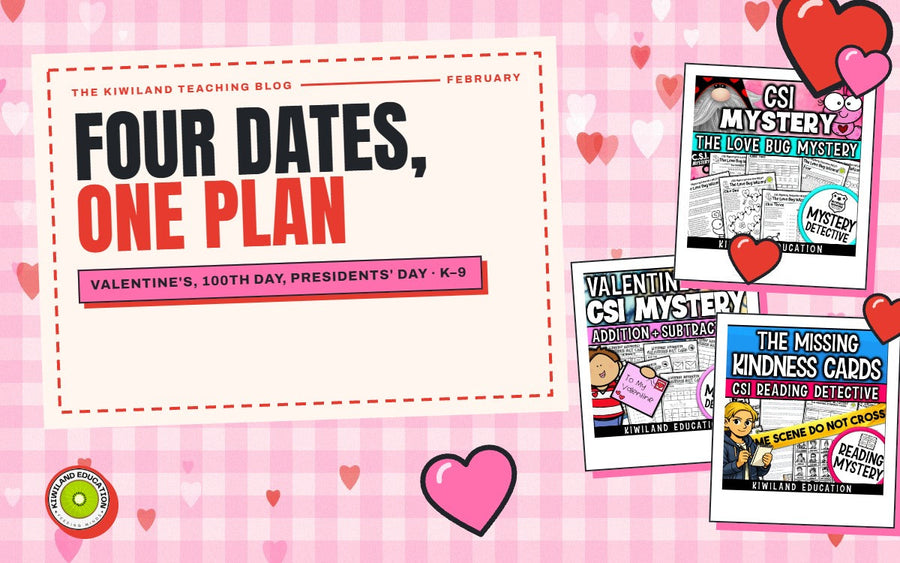
February Activities That Still Teach: Groundhog Day, the 100th Day, Valentine's Day and Presidents' Day
Four holidays in the shortest month. A date-by-date plan with self-checking math cases, reading mysteries and digital escape rooms for K–9.
Read the post →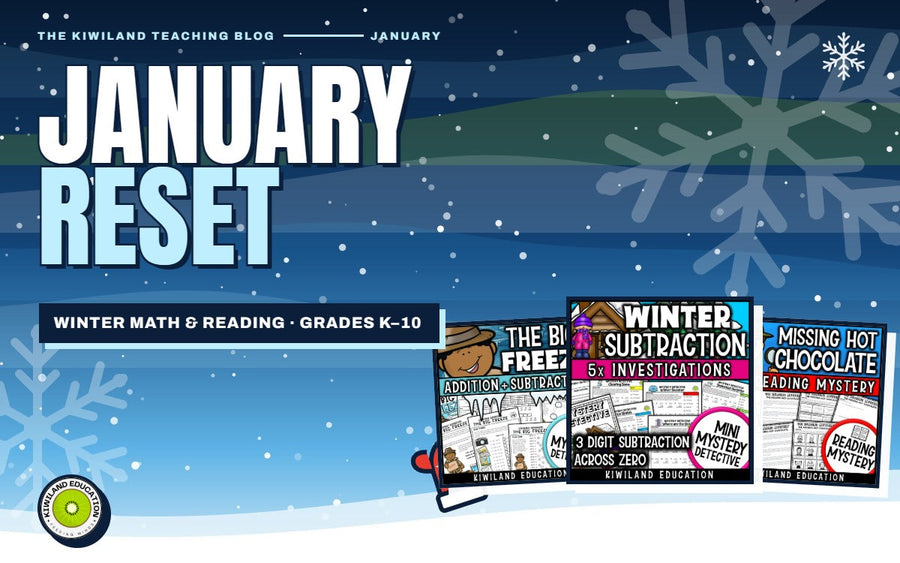
Winter Activities for the First Week Back: A January Reset Plan
The first week of January is a review week, not a fresh start. A first-week-back plan for winter math and reading that puts December...
Read the post →Grade 6 FAQ
What math do 6th graders learn?
In Common Core states, 6th grade math covers five domains: ratios and proportional relationships, the number system, expressions and equations, geometry, and statistics and probability. Students learn ratios and unit rates, divide fractions by fractions, work with negative numbers and the four-quadrant coordinate plane, and write and solve one-step equations. They also find area, surface area and volume, and describe data sets using measures of center and variability.
What are the most important 6th grade math standards?
The Common Core names four critical areas for grade 6: using ratio and rate reasoning to solve problems, finishing division of fractions and extending numbers to include negatives, writing and solving expressions and equations, and developing statistical thinking. Ratios (6.RP) and expressions and equations (6.EE) take up the largest share of the year in most pacing guides.
How do you teach ratios and unit rates in 6th grade?
Start with ratio language and visual models such as tape diagrams, double number lines and ratio tables. A unit rate is the amount for one unit, so students divide to find it and then use it to compare prices or speeds. Plenty of short word problems on unit pricing and constant speed help the idea stick (6.RP.A.3b).
What should a back-to-school review for 6th grade cover?
A good start-of-year review checks the 5th grade skills that 6th grade builds on: operations with fractions and decimals, order of operations, volume of rectangular prisms and plotting points in the first quadrant. A short spiral review in the first week shows which students need extra support before the ratios and fraction division units begin.
Do these 6th grade activities include answer keys?
Yes. Every printable pack includes answer keys, and the detective format is self-checking because each correct answer rules out a suspect until only one is left. The digital escape rooms check answers automatically as students enter each lock code.
What subjects do you have for 6th grade?
Math is the biggest set, with cases for every grade-level standard listed above. There are also reading, science, ELA, social studies activities in the same detective format: students solve each question, match the answer to a suspect and cross suspects off until one is left.