Key takeaways
- Thanksgiving week is usually two or three school days, often with a half day and empty seats. Plan it as review of the unit you just finished, not the start of a new one.
- A simple shape that works: a math case on Monday, a nonfiction reading on Tuesday, a one-page case or a digital escape room on the half day.
- Every right answer eliminates one suspect, so a wrong answer shows up on the page by itself. That matters most on the day a substitute or a half-empty room is running the lesson.
- Real standards underneath, Grades 1 to 8: 2.NBT.B.5, 3.OA.C.7, 4.NBT.B.5, RL.3.1, RI.4.3 and more, listed with each pack below.
The best Thanksgiving math and reading activities for the week before the break are the ones that still count as the lesson. Thanksgiving week is not a normal week with a theme on top. It is a short week, sometimes only two and a half days, with a class that is already half on the road, and whatever you plan has to survive three students leaving early on Tuesday and a sub on Wednesday.
That makes it a different problem from Halloween. In October you are fighting excitement. In November you are fighting the calendar. The fix is not to fill the time with crafts, and it is not to start fractions on Monday and abandon them on Wednesday. It is to spend the short week on review of something you have just taught, in a format that finishes inside one sitting and checks itself.
What should you teach the week of Thanksgiving?
Review, deliberately chosen. Not "something fun," and not new content. Three reasons:
- Attendance is unreliable. Families travel early. Anything new you teach on Monday has to be taught again in December to the students who missed it.
- The unit you just finished is fresh. Most classes close a unit in early or mid November: regrouping, multiplication facts, multi-digit multiplication. The Thanksgiving week is the last good chance to practice it before winter break wipes it.
- You will be grading this on Sunday night, or not at all. A task that tells the student when they are wrong saves you the pile.
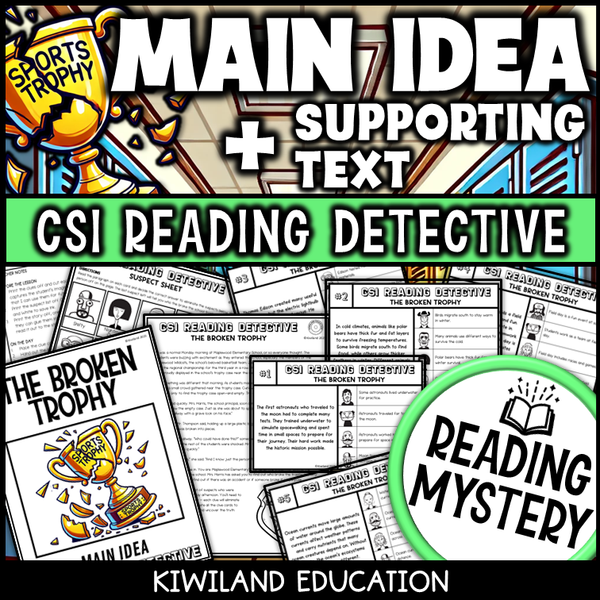
The mystery format does that last part for you. Students solve each problem, then match the answer to a suspect's number. Each correct answer eliminates exactly one suspect. A wrong answer either matches nobody or crosses off the wrong person, and the case won't close. The student goes back and rechecks before you ever see the page.
A three-day plan for Thanksgiving week
| Day | Block | What to run | Why that day |
|---|---|---|---|
| Monday | Math | One case on the unit you just closed | Fullest room of the week, so use it for the skill that matters most |
| Tuesday | Reading | The nonfiction passage on how Thanksgiving became a national holiday | The one Thanksgiving lesson that is actually about Thanksgiving |
| Wednesday | Half day | A one-page Mystery Detective case, or a digital escape room | Fits one period, and a sub can run it with no content knowledge |
If your district gives the whole week off, run the same plan across the Monday to Wednesday of the week before. If you only have Monday and Tuesday, drop Wednesday and keep the reading. It is the piece students can't get anywhere else that week.
Thanksgiving math cases, and the standard under each one
The Missing Pumpkin Pie (multiplication and division facts to 12 × 12, Grades 3–6, 3.OA.A.3, 3.OA.C.7). The pie has gone from the Thanksgiving table and the suspect list is long. Students work facts and short word problems through five clue pages, in color or black and white, with the answer key included. This is the highest-rated of the Thanksgiving packs, at 4.95★ from 56 ratings on TPT. It's sized as a week, so for the short week run two clue pages a day, or keep the last pages for early finishers into December.
The Missing Turkey (two-digit addition and subtraction with a little early multiplication, Grades 2–5, 3.NBT.A.2). The relatives have flown in, the table is set, and something vanishes from the feast. The clue pages don't all look the same: a turkey trail where the running total settles the clue, a map with a letter key, a page where students check worked answers and find the mistakes. That last one is error analysis, and it's the page I would not skip. 4.94★ from 49 ratings.
2-Digit by 1-Digit Multiplication (Grades 3–5, 4.NBT.B.5). Five one-page cases (the pumpkin pie recipe, the school pumpkin, who is carving the turkey) where each product crosses off one suspect. One case fills a period, which is exactly what a half day needs. Its partner, 2-Digit by 2-Digit Multiplication (Grades 4–6, 4.NBT.B.5), leaves room on the sheet for the partial products.
For the younger grades. 2-Digit Addition and Subtraction (Grades 1–3, 2.NBT.B.5) mixes both operations on the same page. 3-Digit Addition and Subtraction (Grades 2–4, 2.NBT.B.7, 3.NBT.A.2) puts carrying and borrowing side by side, and 4-Digit Addition and Subtraction (Grades 2–5, 4.NBT.B.4) runs sixteen problems a case across four columns.
A reading lesson that is actually about Thanksgiving
Most Thanksgiving reading is a turkey story. That's fine for a fluency day, but you can do better on Tuesday, because the real history is better than the story.
Thanksgiving was not a national holiday until 1863. It became one largely because of Sarah Josepha Hale, a magazine editor (and the author of "Mary Had a Little Lamb") who wrote letters to presidents and governors for seventeen years asking for one national day of thanks. Abraham Lincoln finally proclaimed it in the middle of the Civil War. Students almost never know this, and it is a ready-made lesson in cause and effect, sequence, and how one person changes a law.
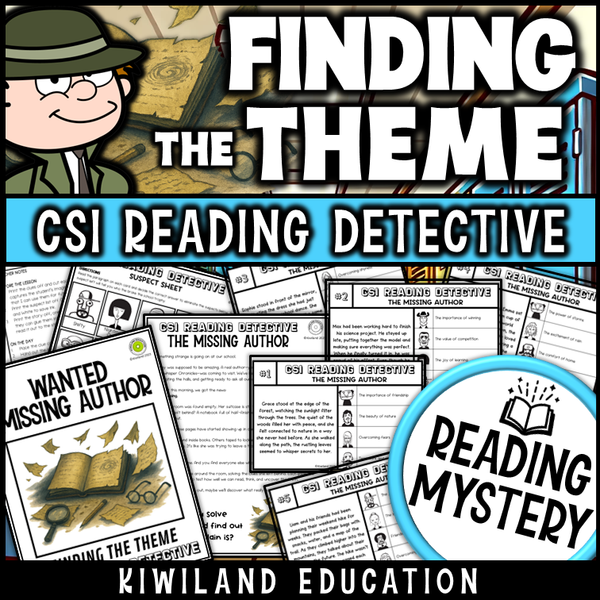
Sarah Josepha Hale: The President Who Saved Thanksgiving (nonfiction, Grades 3–6, RI.4.1, RI.4.2, RI.4.3) is a two-page passage on exactly that, with multiple-choice and written-response questions, sample answers, a word search and extension tasks. Each comprehension answer rules out a suspect, so students go back into the text for evidence instead of guessing. It doubles as a social studies lesson if your ELA block is short that week.
If you would rather have the fiction, The Case of the Missing Turkey (fiction, Grades 3–6, RL.3.1, RL.3.2, RL.3.3) follows Gobbleton, the "guest of honor" who disappears from the Maple Ridge Harvest Festival. It's built for inference and character questions. Running both, one on Tuesday and one held for after the break, gives you a fiction-and-nonfiction pair on the same theme.
What teachers say after running them
Verified purchasers on TPT, quoted as written:
"Kids loved it. Great for the days before Thanksgiving."
— Lourdes L., 2nd grade, on The Missing Turkey (4.94★, 49 ratings)
"My students have been loving using this resource for early finishers"
— Kaitlyn K., on The Missing Pumpkin Pie (4.95★, 56 ratings)
"It practiced text evidence skills and it was engaging."
— Latoya W., 4th grade, on The Case of the Missing Turkey (Reading)
And one that makes the point of this whole article better than I can. It isn't about a holiday at all:
"My students had so much fun playing this when we started our 2x1 multiplication"
— Tamara E., 3rd grade, on 2-Digit by 1-Digit Multiplication
That's the test for a seasonal resource: would you still use it in a normal week? If the answer is yes, it's a lesson. Across the whole catalog, teachers have left 10,000+ ratings averaging 4.84★.
Thanksgiving activities by grade
Grades 1–3. 2-Digit Addition and Subtraction, or the Addition and Subtraction Within 100 Digital Escape Room for a device day. More at Grade 2 Number and Operations in Base Ten.
Grades 2–4. The Missing Turkey, 3-Digit Addition with Regrouping and 4-Digit Addition and Subtraction. Browse Grade 3 Number and Operations in Base Ten.
Grades 3–6. The Missing Pumpkin Pie for facts, the two multiplication packs for Grade 4 Number and Operations in Base Ten, and the Elapsed Time Digital Escape Room (3.MD.A.1). More fact practice at Grade 3 Operations and Algebraic Thinking.
Grades 4–8. Digital rooms on adding and subtracting fractions (4.NF.B.3, 5.NF.A.1), adding and subtracting decimals (5.NBT.B.7) and one-step equations (6.EE.B.7). See also Grade 6 Expressions and Equations.
For the ELA block. The two Reading Mysteries above, plus the Context Clues and Figurative Language Digital Escape Rooms. For K–2 social studies, Needs and Wants fits a week about being thankful for what you have.
Device day. All eight rooms are in Thanksgiving Digital Escape Rooms. They run in a browser with nothing to set up, which suits the Wednesday when the room is half full.
Three days, planned in one print run
A short week can still be a real week.
Pick the math case that matches the unit you just finished, add the Thanksgiving history reading, and keep a one-page case for the half day.
Browse Thanksgiving and Fall Activities →FAQ
How long does a Thanksgiving mystery take? A one-page Mystery Detective case fits one class period. The longer CSI packs, like The Missing Pumpkin Pie, have five clue pages and are designed as a week, so in a short week run two pages a day or save the rest for early finishers.
Is there any prep? Print and go. No cutting, laminating, apps or student logins, and every pack includes the answer key. The digital escape rooms open from a link.
Will a substitute be able to run it? Yes, and that is one of the best uses for the Wednesday before Thanksgiving. Because a wrong answer fails on the page, the sub doesn't need to know the content to keep students accurate.
What if my school doesn't celebrate Thanksgiving? Use the fall cases instead. Who Stole the Colors? and The Missing Leaves carry the same math with a fall setting and no holiday.
Is the Sarah Josepha Hale reading accurate history? Yes. It covers her letter-writing campaign and Lincoln's 1863 proclamation, at a Grades 3–6 reading level. It's written for comprehension, so pair it with your own social studies materials if you're going deeper.
Read next