Groundhog Day
Reading Mystery Worksheets · Grades 3–6 · Holiday Traditions
Instant PDF download after checkout. Prefer TPT? It's there too.
Inside the case file
Will there be six more weeks of winter? This printable Groundhog Day Reading Mystery turns a nonfiction passage about the Groundhog Day tradition into a reading-detective investigation for Grades 3–6 classroom teachers, homeschoolers, and tutors. It drops straight into a February, holidays, or seasons lesson and hooks students into reading for the evidence.
The case only cracks if students read for detail; each text-based answer rules a suspect out until one remains. Print-and-go, zero setup.
Quick Details
Grade Levels: Grades 3–6
Format: Printable PDF
Resource Type: Reading Mystery worksheets
Reading Skills: Nonfiction comprehension, text evidence, main idea, cause and effect, and inference
Tech Needed: None — no apps, locks, passwords, or student logins required
The Case
It is Groundhog Day and something has gone wrong before the big prediction, and a line-up of suspects is waiting. The only way to crack the case is to read closely about Groundhog Day — the tradition, the legend, and what the groundhog's shadow is said to mean — using every comprehension answer as a clue to rule a suspect out, until just one remains.
How the Reading Mystery Works
As Reading Detectives, students read about Groundhog Day and use each correct answer to knock out a suspect until one is left — the passage is the only way through.
What's Included
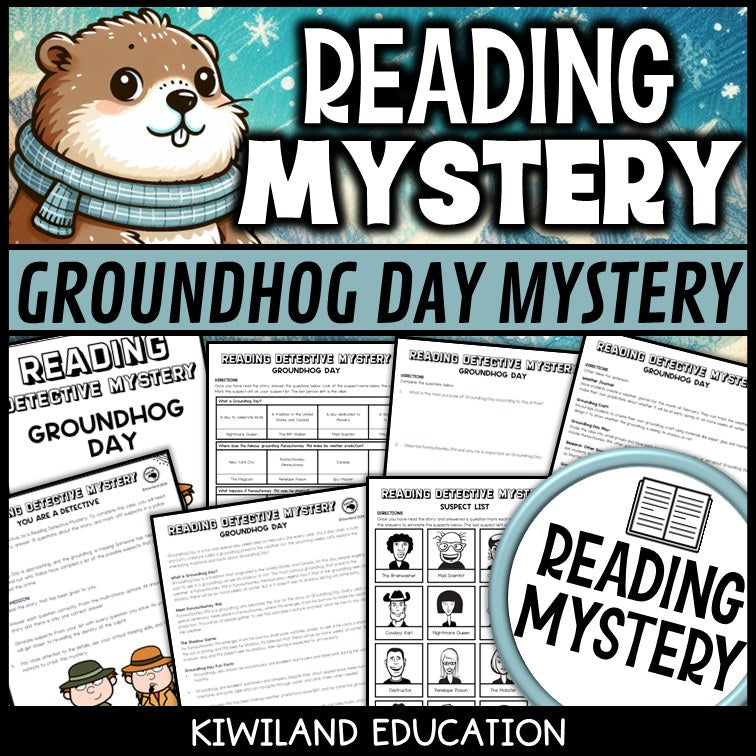
- A "You are a detective" case-file page that sets the scene and the mission
- An engaging nonfiction passage on Groundhog Day (the tradition, the legend, and what the shadow means)
- Multiple-choice comprehension questions (all answers found in the text)
- Open-ended comprehension questions
- A suspect line-up page for eliminating suspects one clue at a time
- Vocabulary support and extension activities for early finishers
- A full answer key
- Color and black-and-white versions
- Print-and-go PDF format
Skills Covered
- Reading and understanding nonfiction informational text
- Finding and using text evidence
- Identifying main idea and supporting details
- Cause and effect and drawing inferences
- Vocabulary in context
- Logic, reasoning, and critical thinking
Best Used For
- February holidays and seasons lessons
- Nonfiction reading comprehension practice
- Reading centers, early finishers, sub plans, and small groups
- Winter and high-interest reading
- Homeschool reading