
Key takeaways
- The best sub plan isn't busywork — it's an activity that corrects itself, so the substitute never has to know the content.
- In a mystery pack, every correct answer eliminates one suspect. A wrong answer matches nothing on the clue list — which tells the student to recheck, with no adult needed.
- Teachers already use them exactly this way: "This was a fun activity to leave with a substitute teacher!" — verified TPT reviewer, on a pack rated 4.94★ across 149 reviews.
- Print the pages, leave the answer keys in an envelope, done. Grades 2–9 covered below.
Every teacher knows the 6am problem. You're too sick to stand up, the sub folder hasn't been refreshed since October, and whatever you leave has to survive a stranger running your room. After 20+ years in education I can tell you what most emergency sub plans really are: a movie, a word search, and a silent prayer.
The problem isn't the sub. It's that almost every worksheet needs you — to explain it, to answer "is this right?", and to mark the pile afterwards. So here's the one property worth building your whole sub folder around: the activity has to check itself.
The self-checking trick
Here's how the mystery format does it, straight from the instructions page that ships in every pack:
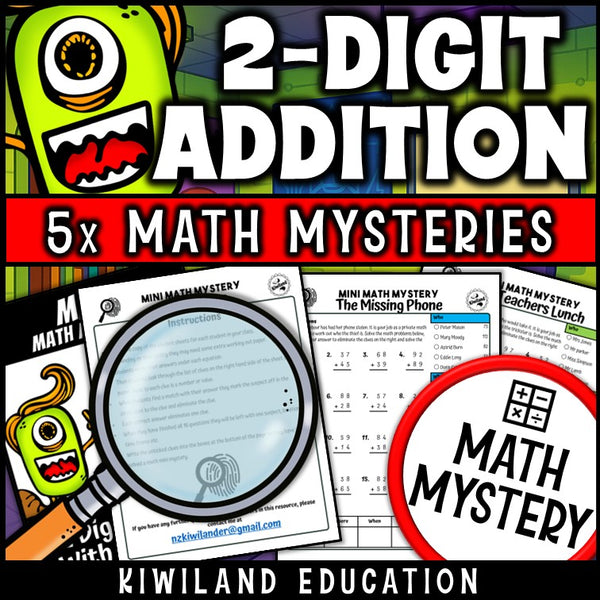
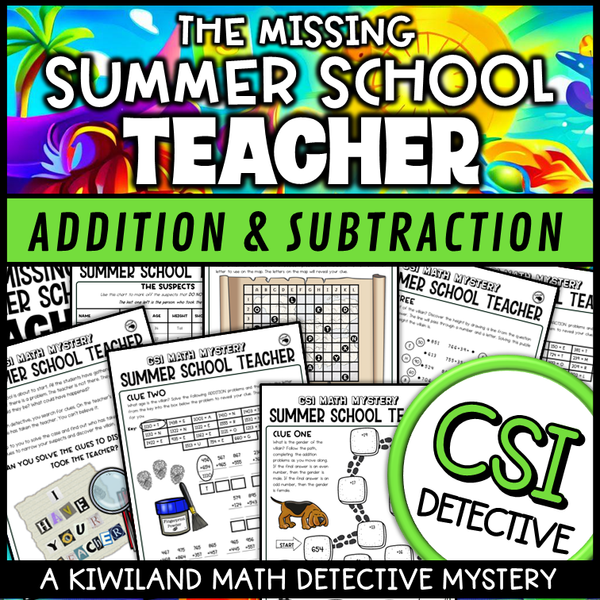
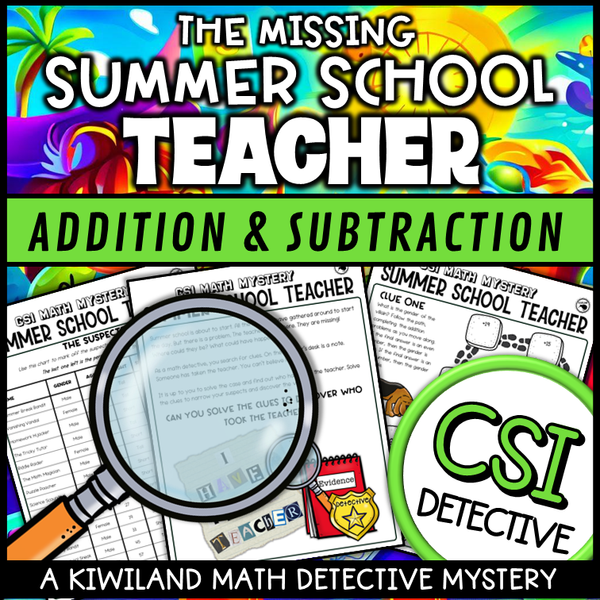
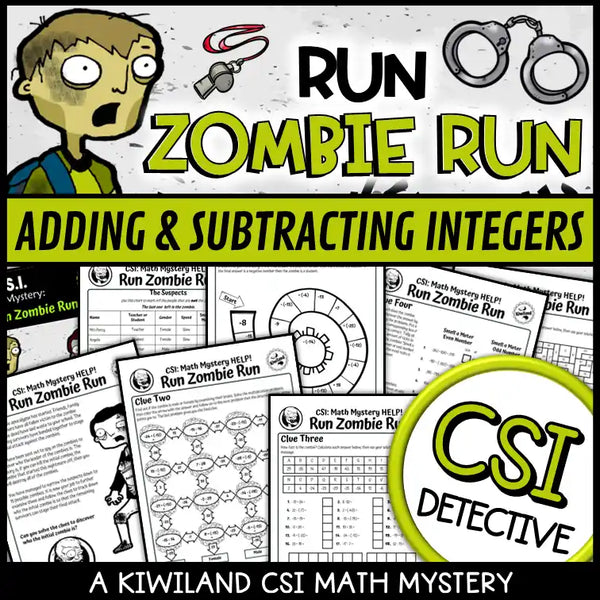
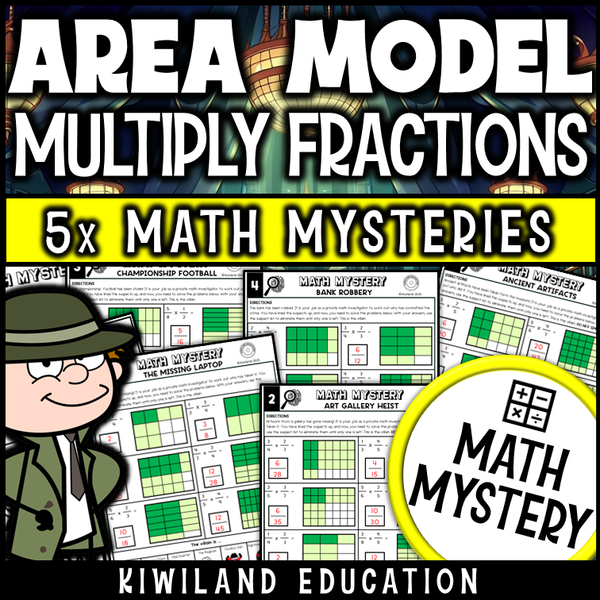
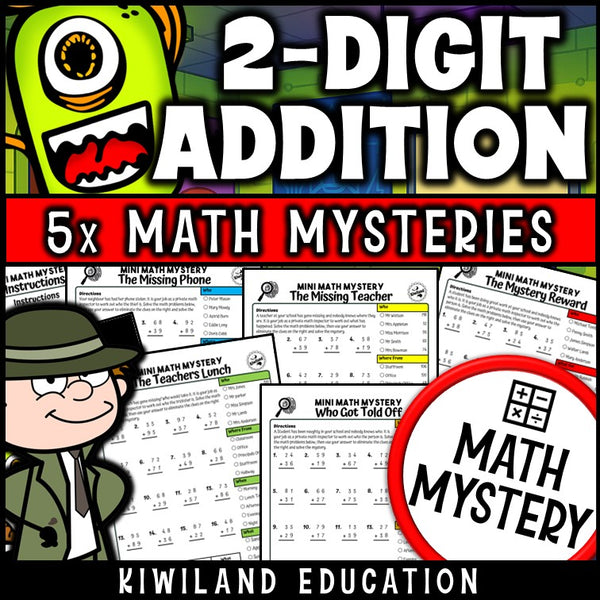
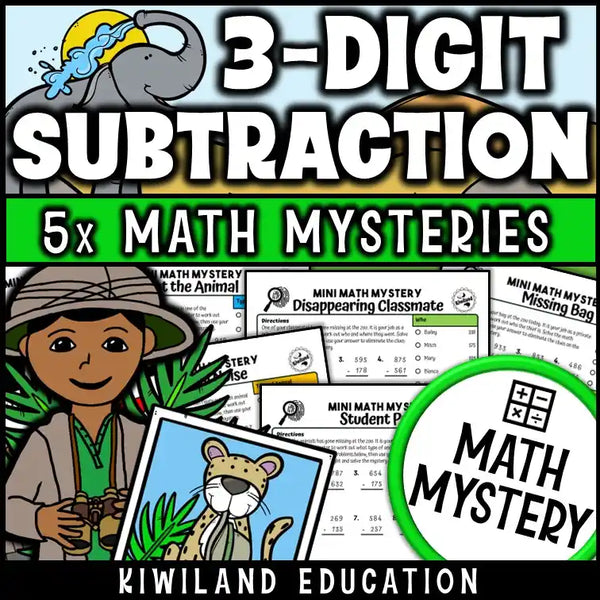
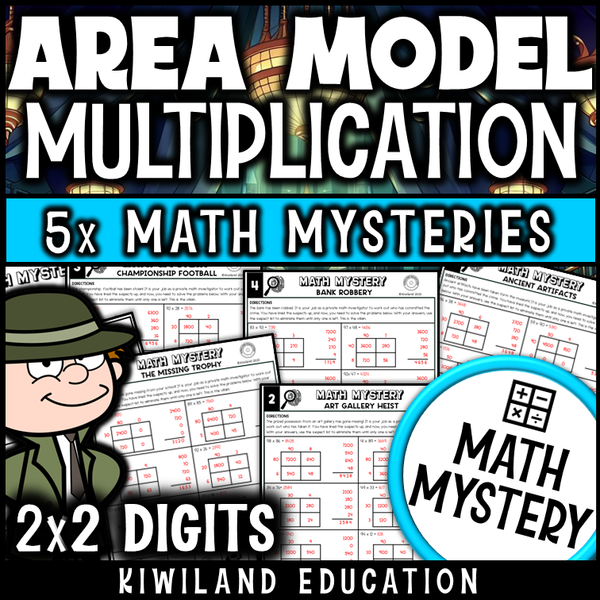
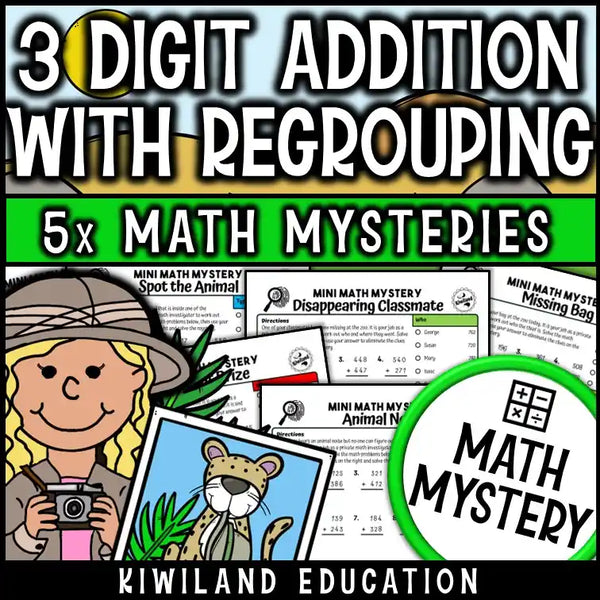
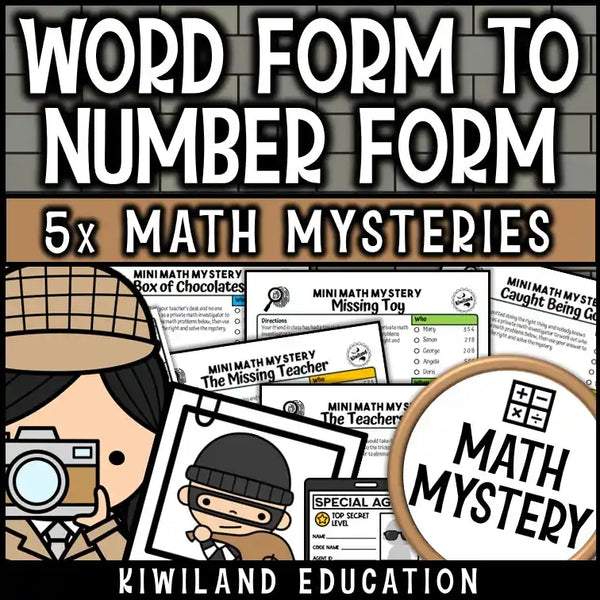
Students solve each problem and write the answer in the box. Then they scan the clue list beside the suspects — every clue carries a number. If their answer matches a clue, they cross that suspect off. Each correct answer eliminates exactly one option. Work through every problem and one suspect is left standing: the villain.
Now look at what that mechanic quietly does for a substitute:
- A wrong answer matches nothing. No clue carries it — so the student knows, on their own, to go back and recheck. Nobody raises a hand to ask the sub whether 8,883 ÷ 987 is right, because the page itself answers them.
- The sub needs zero content knowledge. The instructions fit on one page; the math is self-verifying; the answer keys sit in an envelope for the end.
- Nothing to mark when you're back. If a student named the right villain, they solved the page. You can see it from the doorway.
- The story does the classroom management. A whodunnit has a finish line — students race to name the villain instead of watching the clock.
Don't take my word for it
These are verified purchasers on the back-to-school CSI Math Mystery (4.94★, 149 ratings), quoted as written:
"This was a fun activity to leave with a substitute teacher!"
— Megan T., verified TPT purchaser
"I love using these for sub plans. students love it too"
— Casey M., verified TPT purchaser
"My students absolutely LOVED this resource. They put their math skills to the test and used some sleuthing skills to discover who the missing teacher was."
— Mallerie S., verified TPT purchaser
Across the full Kiwiland catalogue, teachers have left 9,900+ ratings averaging 4.8★ — and "left it for a sub" is one of the most common things they say.
Build the folder once: picks by grade
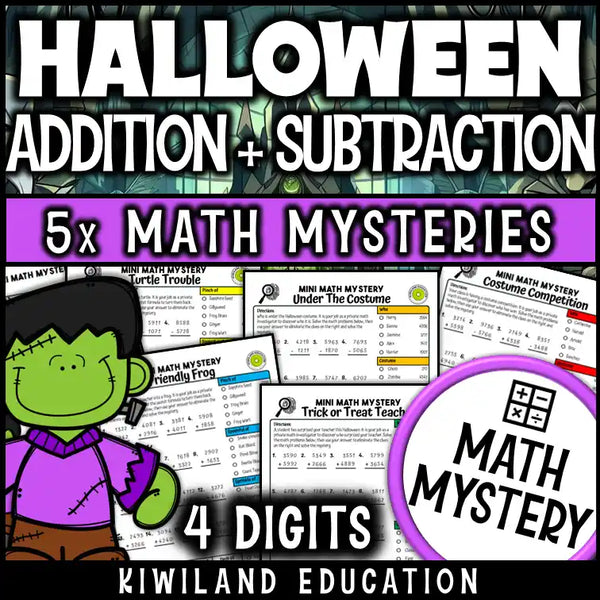
Grades 2–5. The Secret Number (addition & subtraction) for the core skills, and The Haunted Hallway (3-digit addition & subtraction) once autumn hits — same mechanic, seasonal skin.
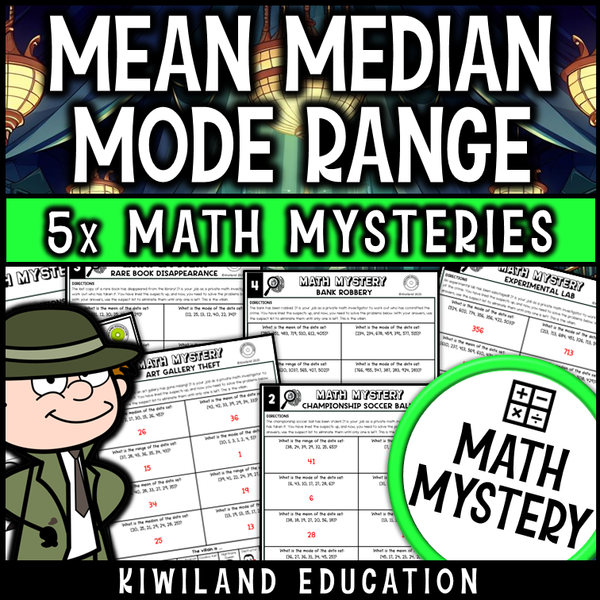
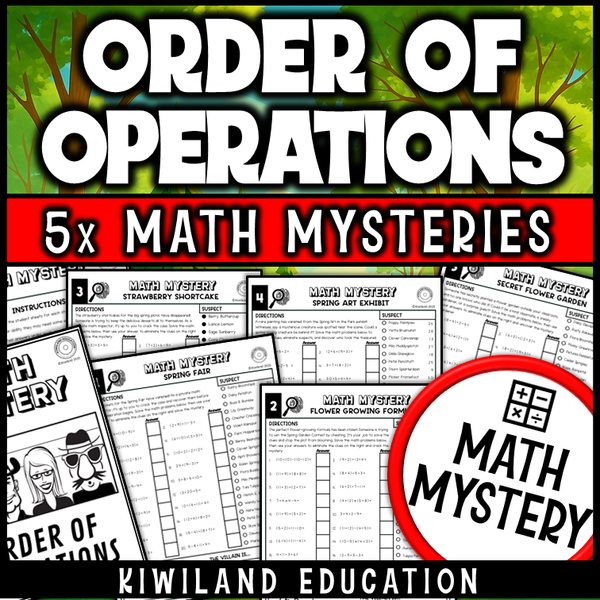
Grades 4–7. Order of Operations with Exponents and Adding & Subtracting Decimals — the units where a sub is least able to help, which is exactly when self-checking earns its keep.
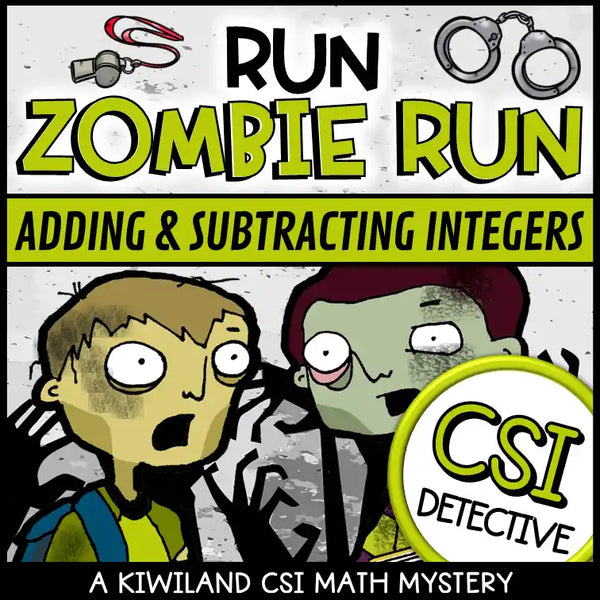
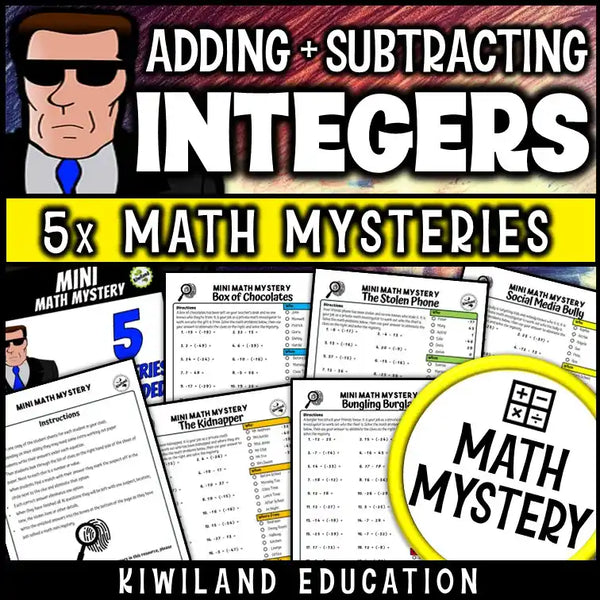
Grades 6–9. Adding & Subtracting Integers, and for algebra classes, Solving Quadratics by Factoring — yes, the mystery mechanic works all the way up to Grade 11.
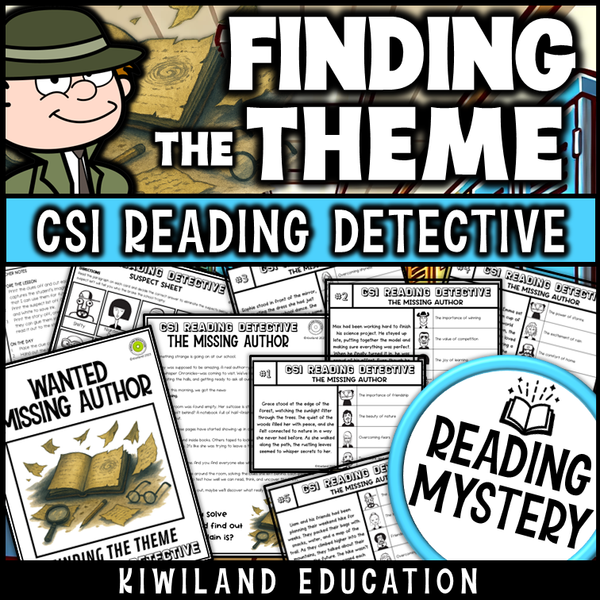
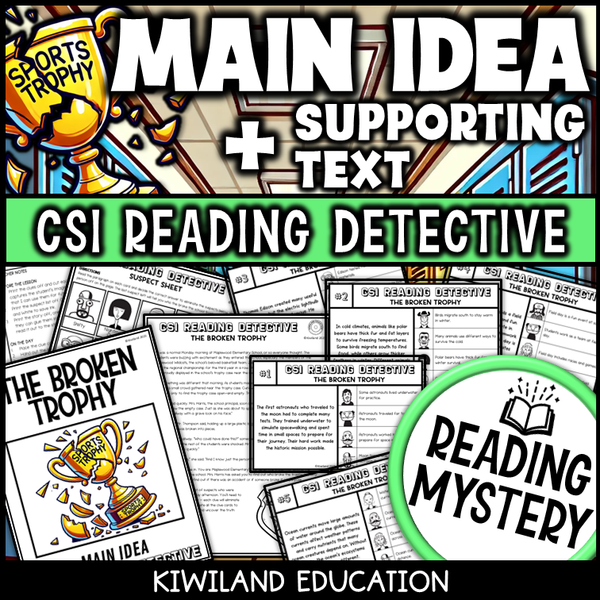
ELA block, or a 1:1 device day. The Reading Mysteries run on the same eliminate-the-suspects engine with a passage instead of problems, and the Digital Escape Rooms are fully self-running in a browser — the sub just writes the link on the board.
One print run = a term of sub cover
Build a sub folder that runs without you
Pick one mystery per unit you teach, print a class set of each, and park them with the answer keys. That's the whole system.
Browse Math Mysteries →FAQ
Does the substitute need to understand the math? No — that's the point of the format. The page verifies answers itself (a wrong answer matches no clue), and the answer keys are included for the end of the lesson.
How long does one mystery take? Most classes fill 30–45 minutes on a single case; packs contain multiple cases, so one pack covers a full day's math blocks.
What do I actually leave for the sub? The printed student pages, the one-page instructions that ship in the pack, and the answer keys in an envelope. Nothing else.
What if a student finishes early? Cross-check: fast finishers can verify a neighbour's villain using the clue list — or start the next case in the pack. Early finishers are who these were built for.
Read next